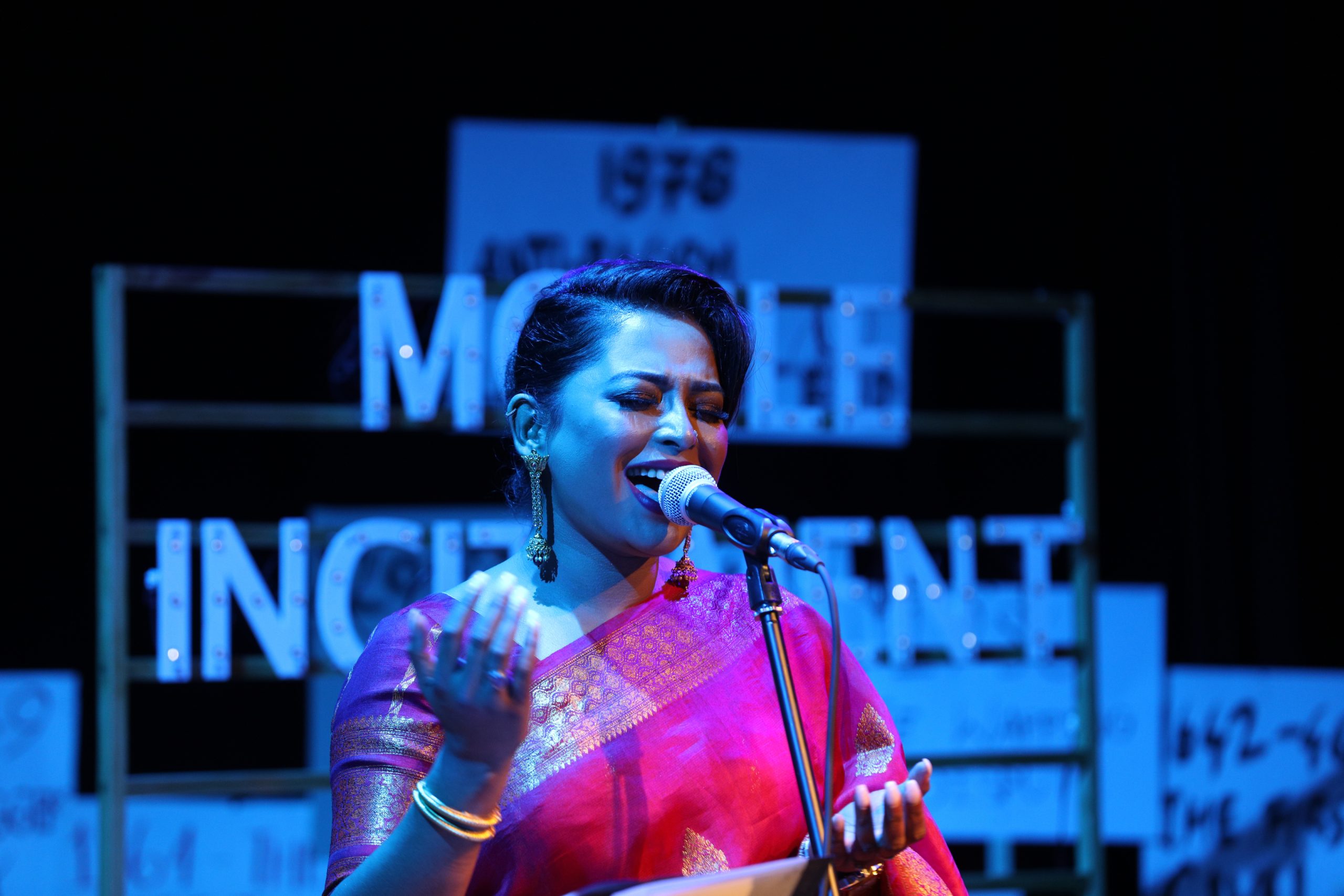
London, United Kingdom – Friday 05 November 2021, LBTH, FITF – Daedalus Theatre Company, Gerrard Winstanley’s Mobile Incitement Unit. 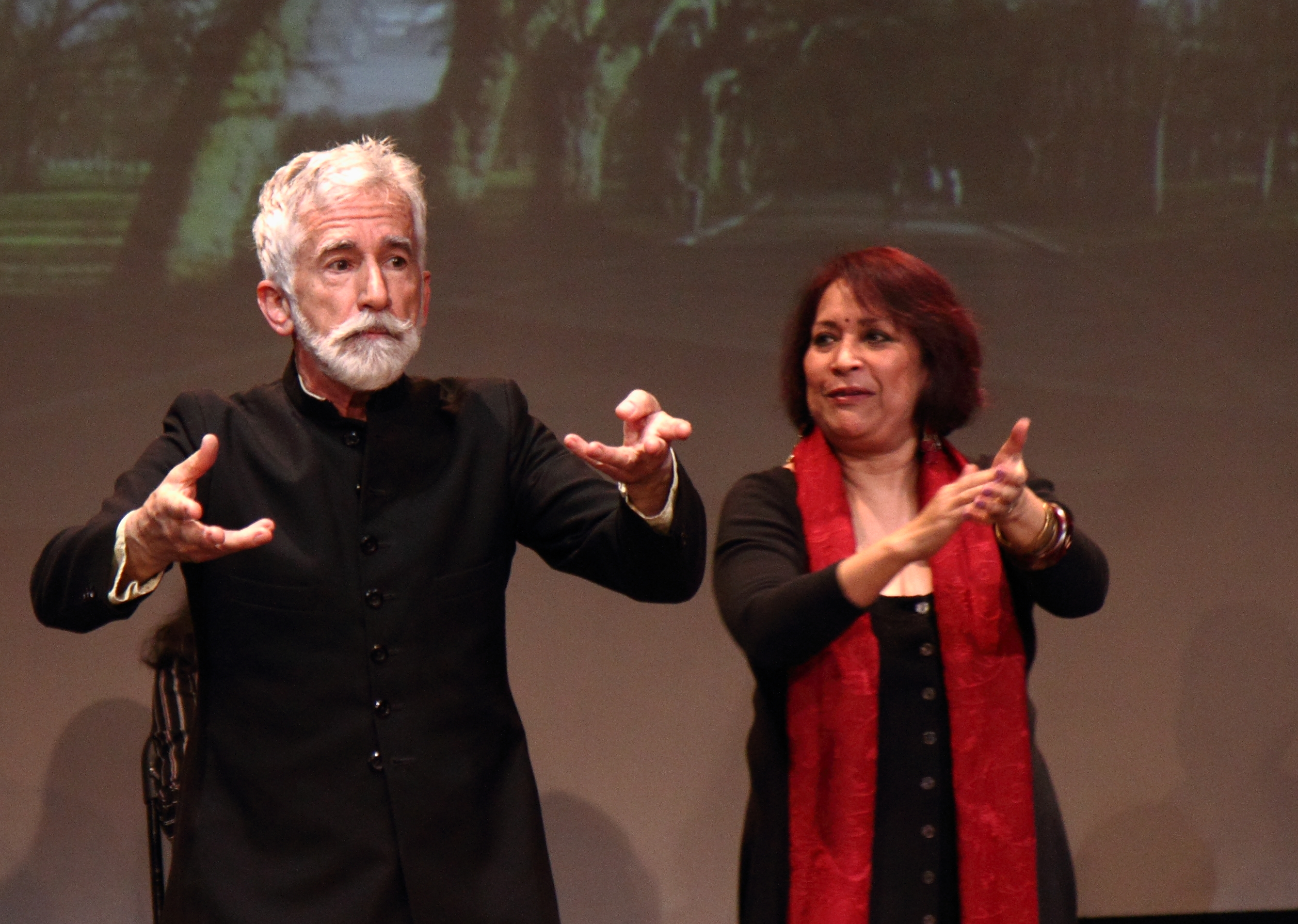
East at Rich Mix – Photo: Simon Daw 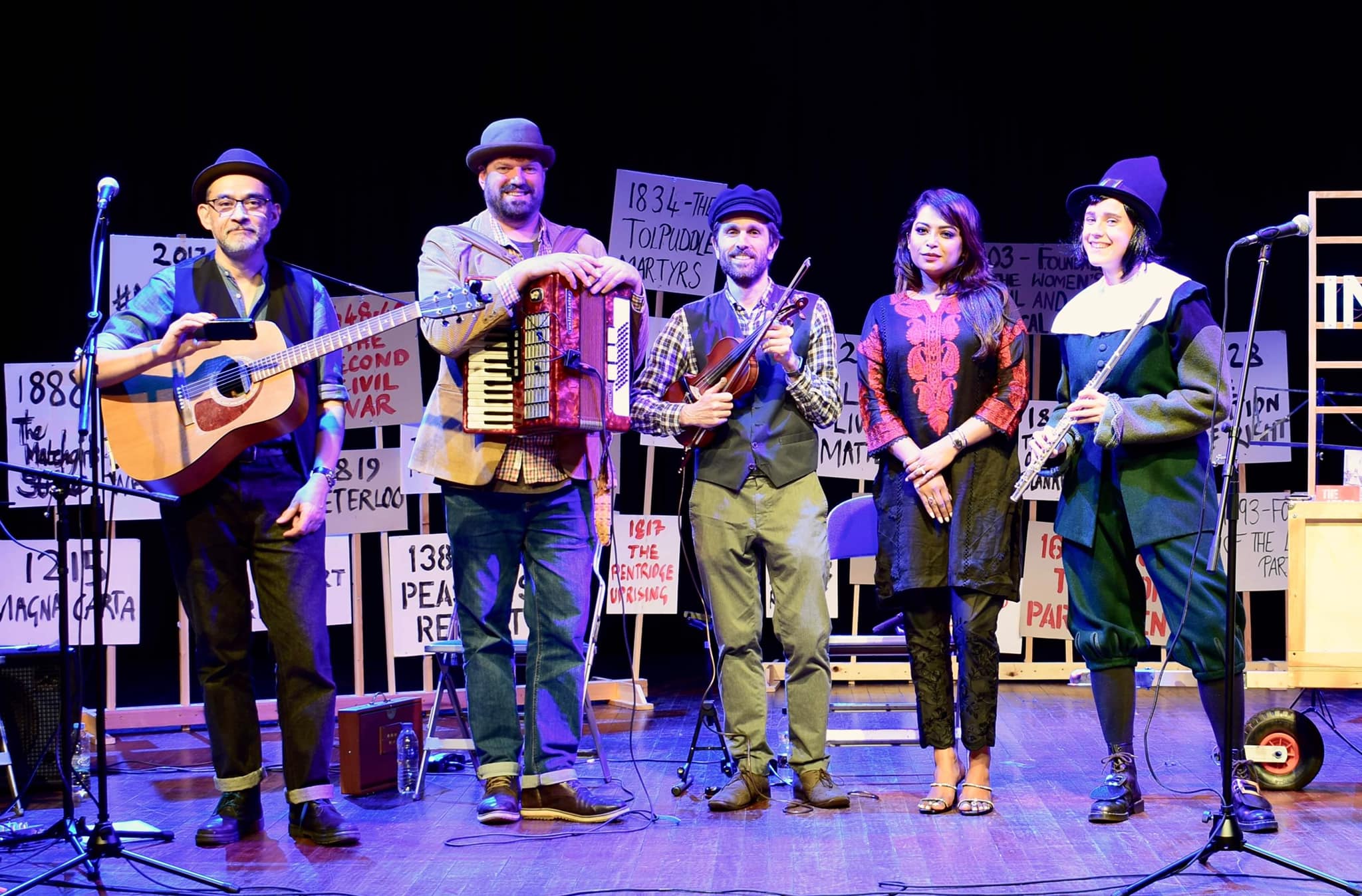
Mobile Incitement at the Freedom and Independence Festival 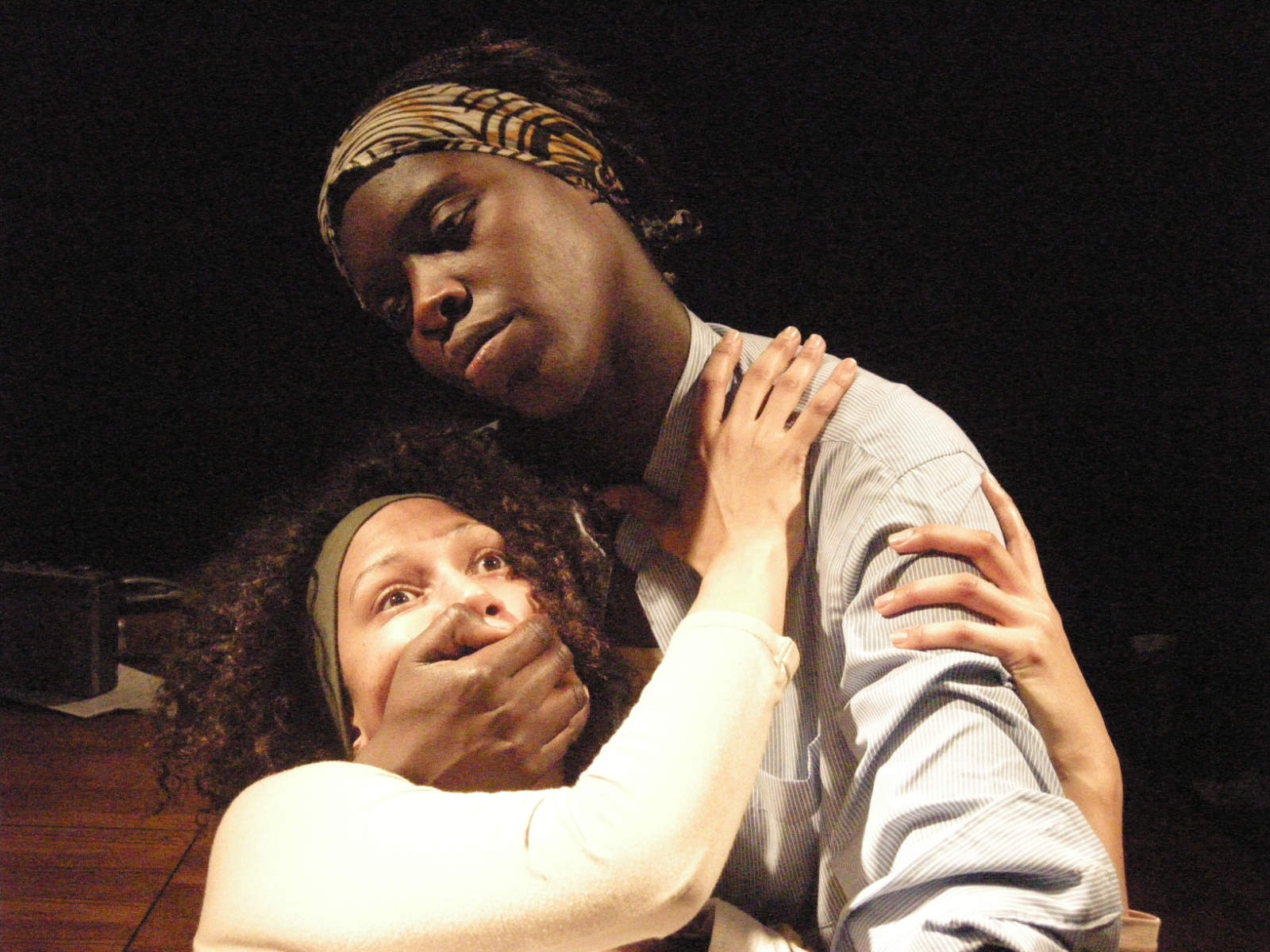
A Place at the Table: Jennifer Muteteli and Anna-Maria Nabriye 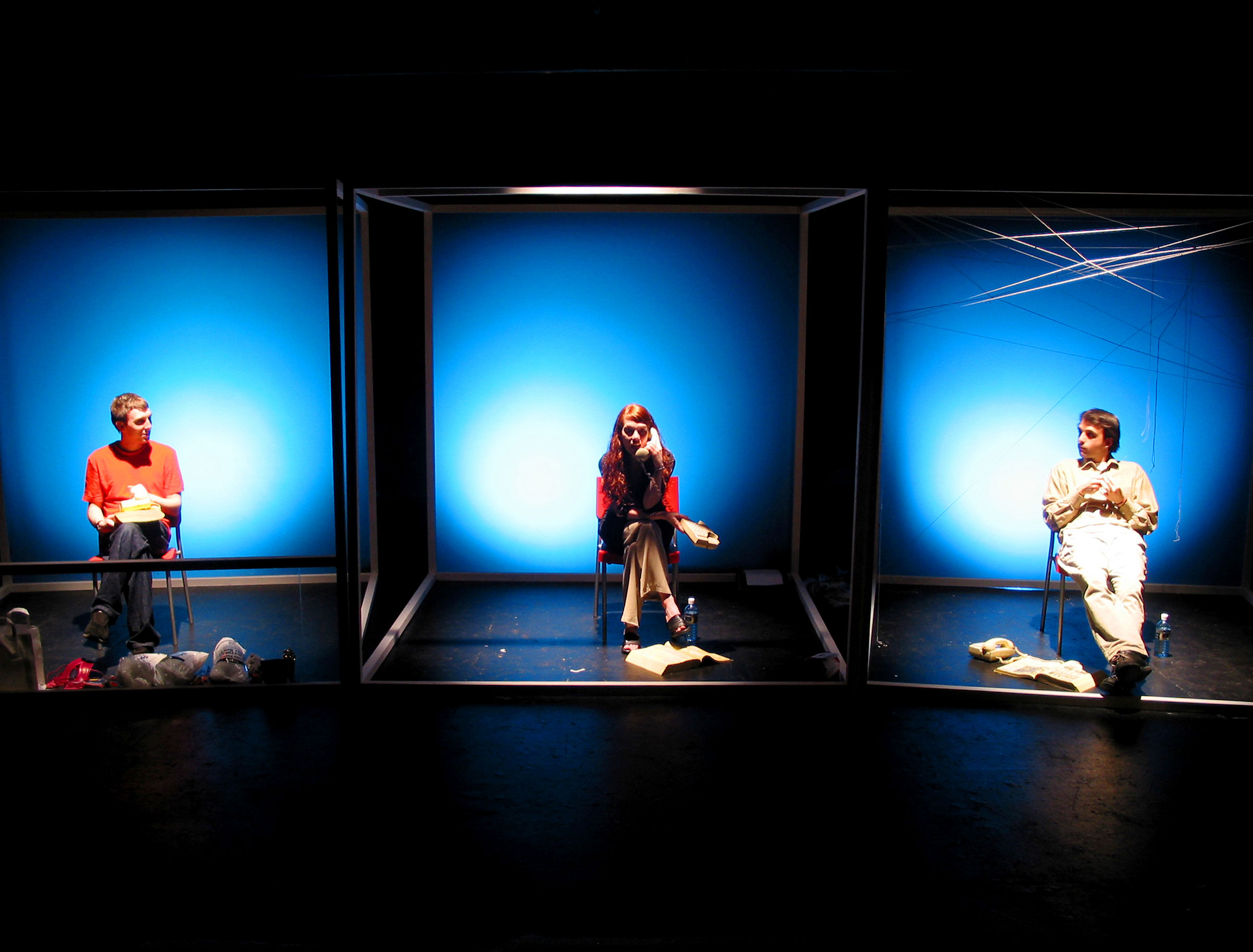
Selfish at The Arches, Glasgow: Graeme Mackay, Susan Worsfold and Onur Orkut 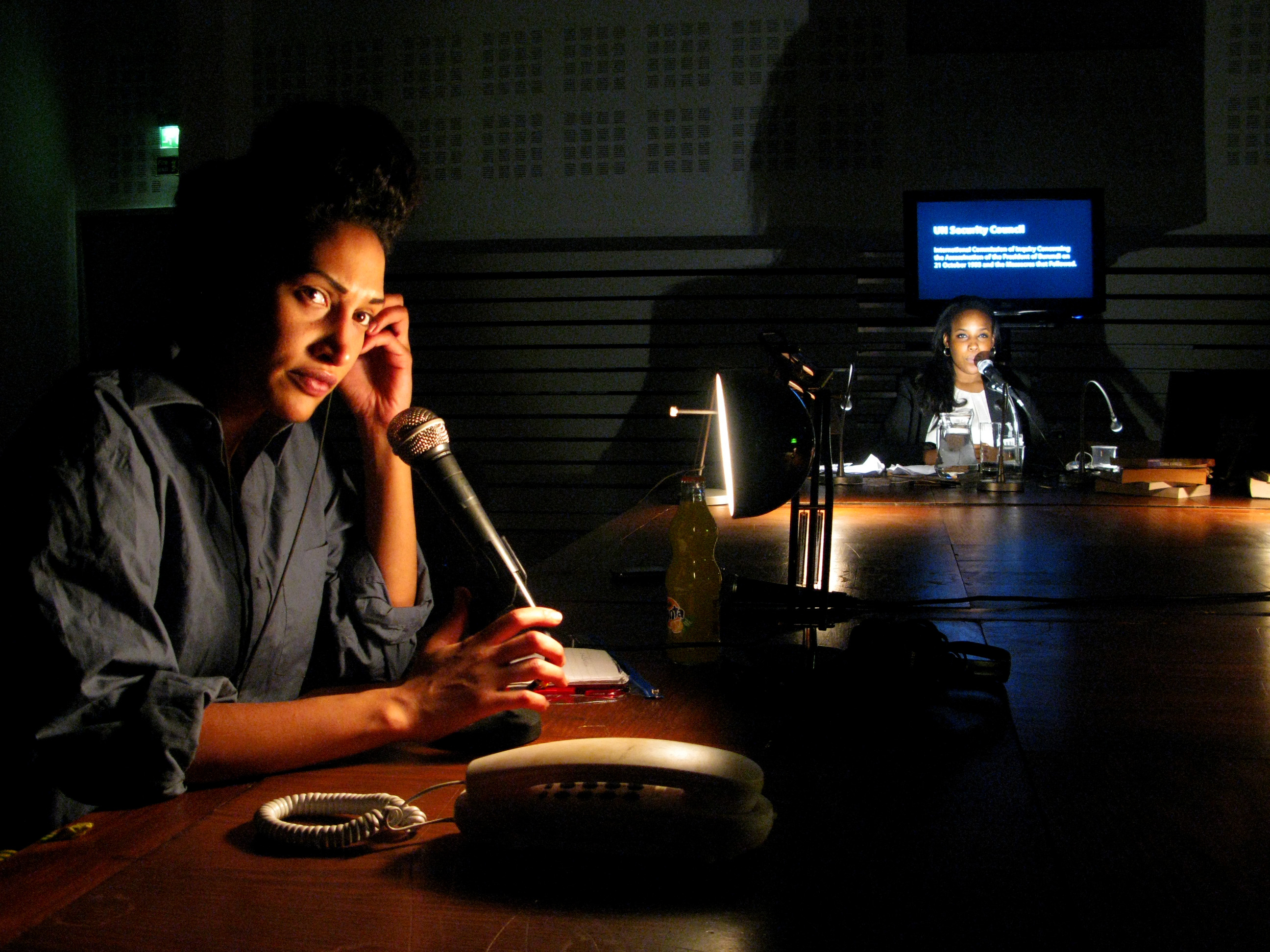
APATT at AIUK – Photo: Harriet Stewart 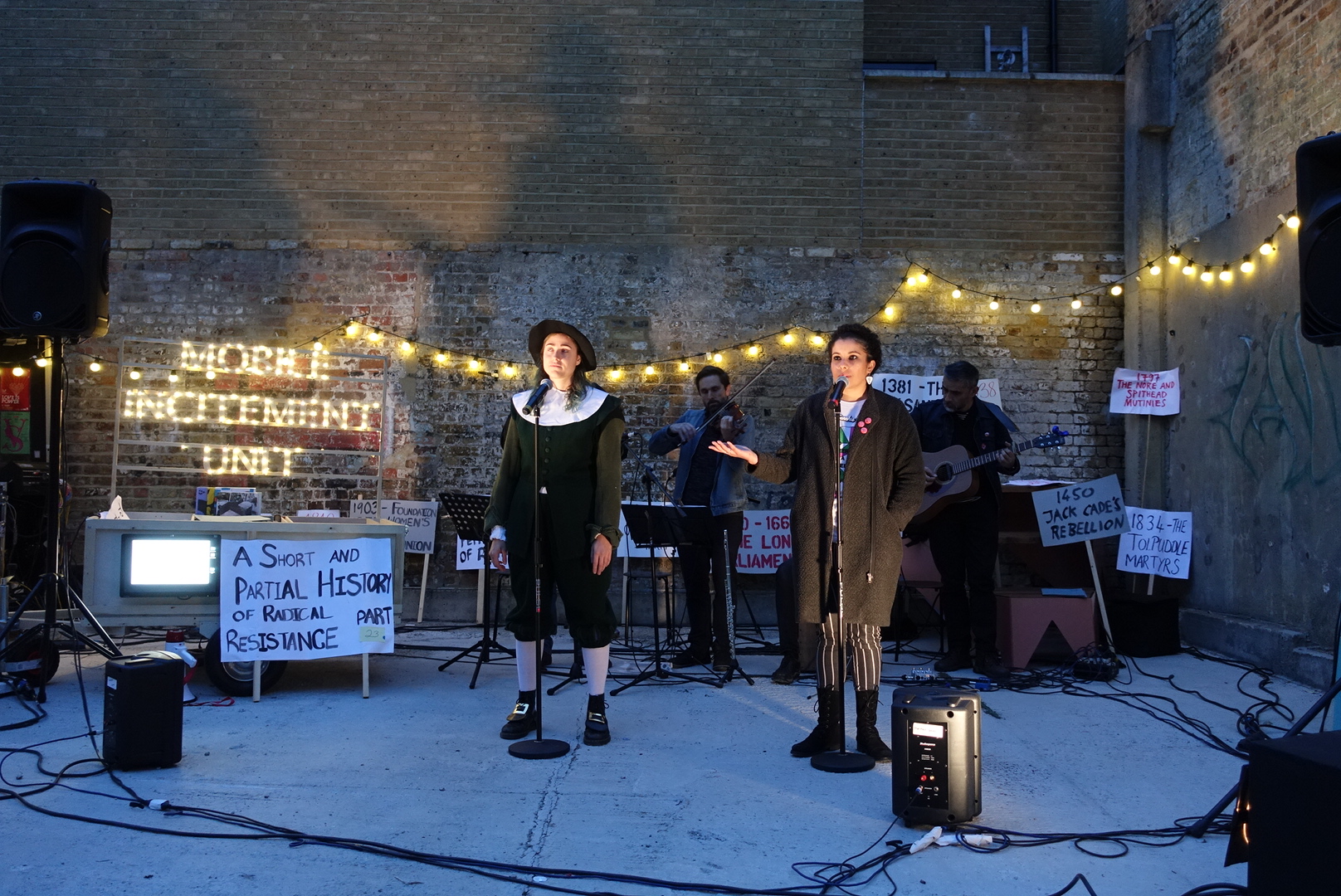
Mobile Incitement at Brixton City Festival 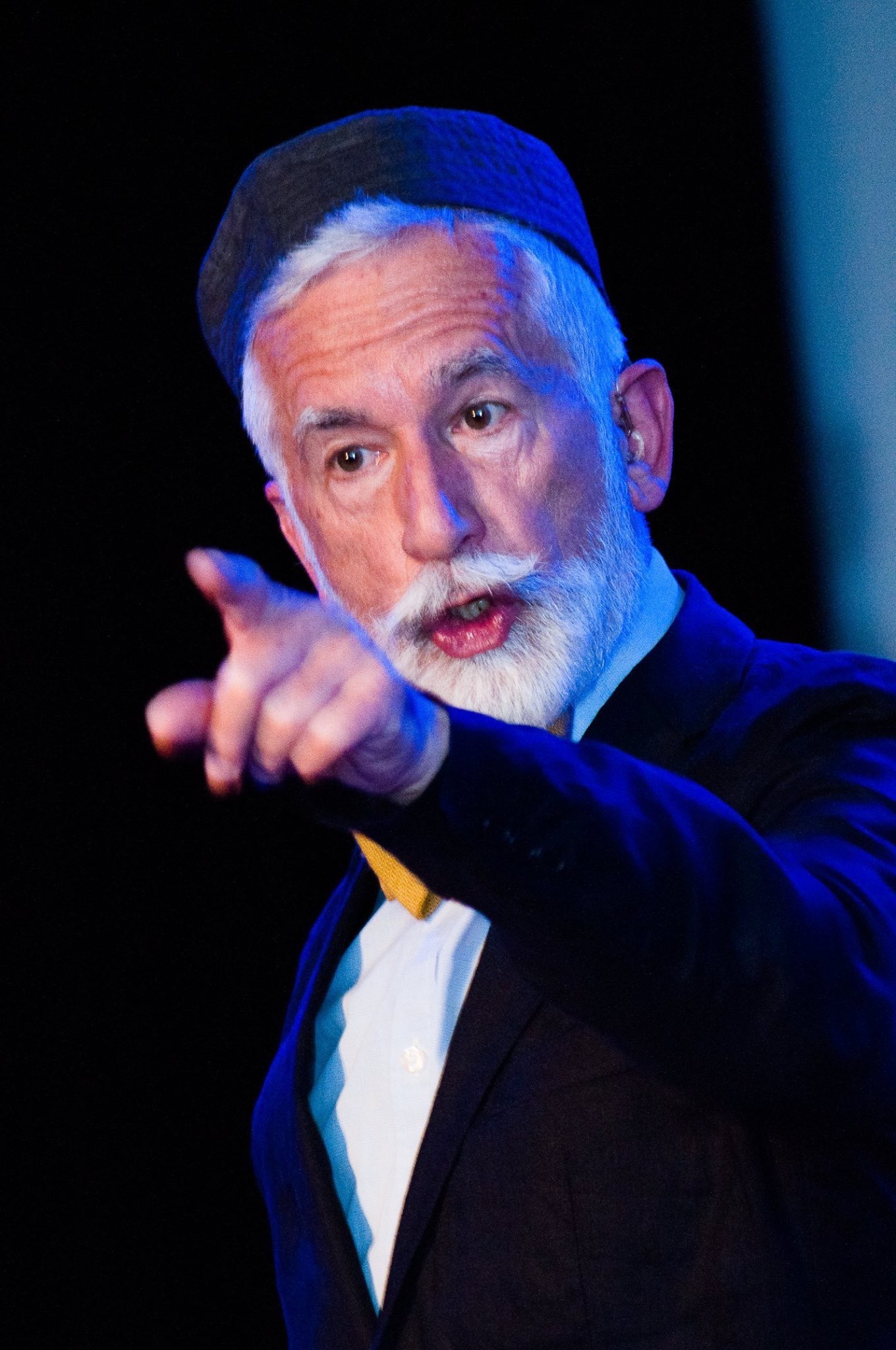
East at Boi-Lit 16 – photo by Shoayeeb Chamak for BSK 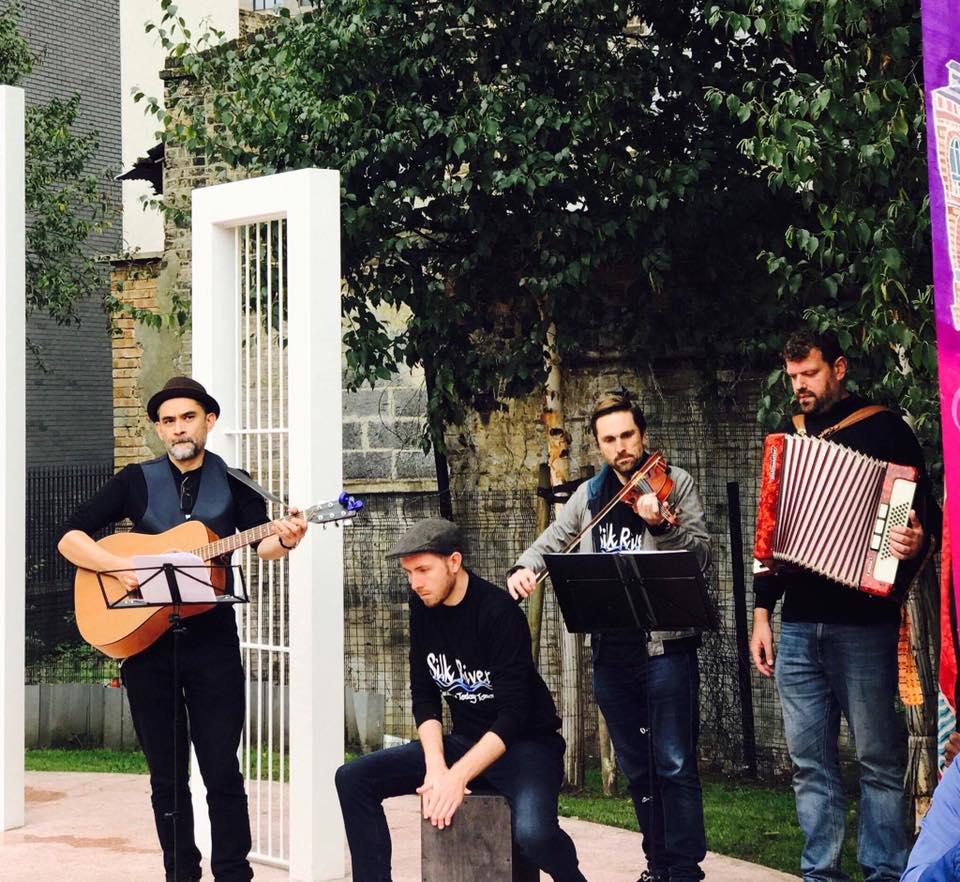
The Black Smock Band – part of the Silk River project 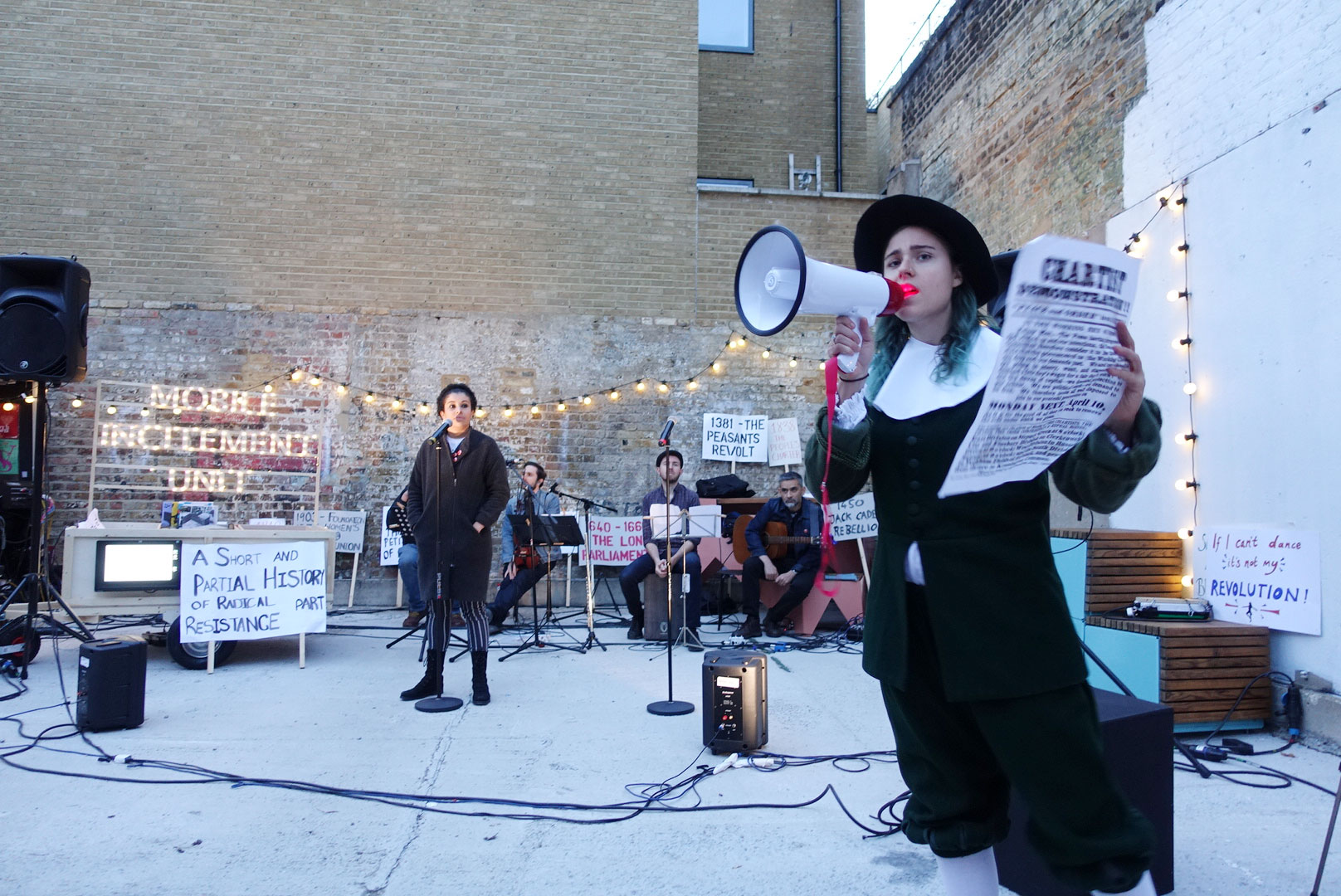
Mobile Incitement at Brixton City Festival 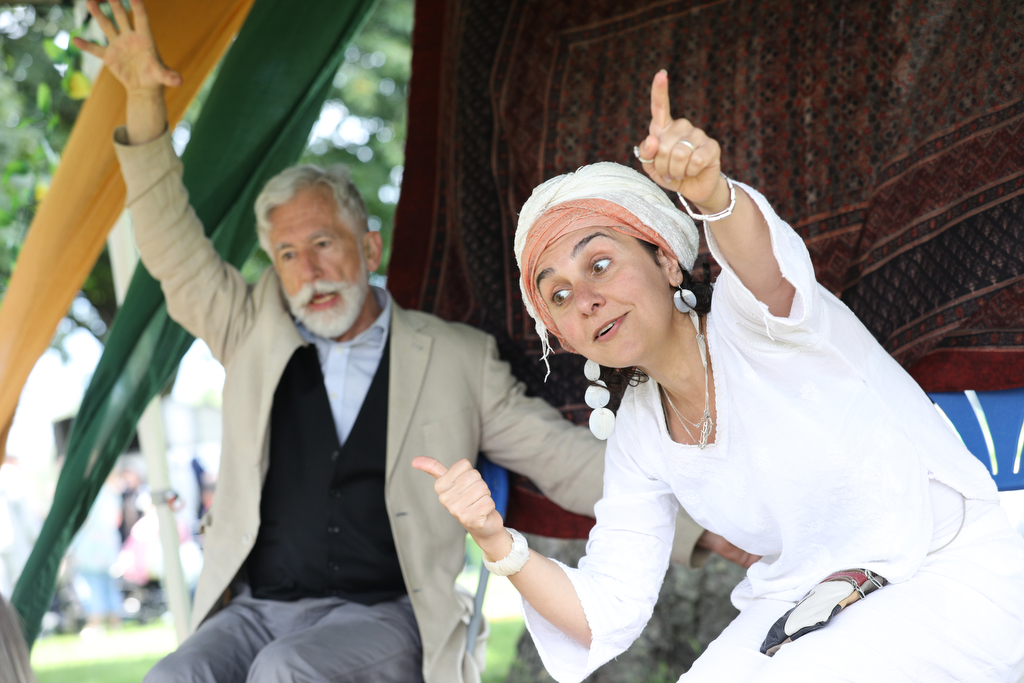
Saturday 05 August 2017, LBTH – Sef Townsend and Alia Alzougbi of East at Great Day Out at Victoria Park – Photo, Rehan Jamil 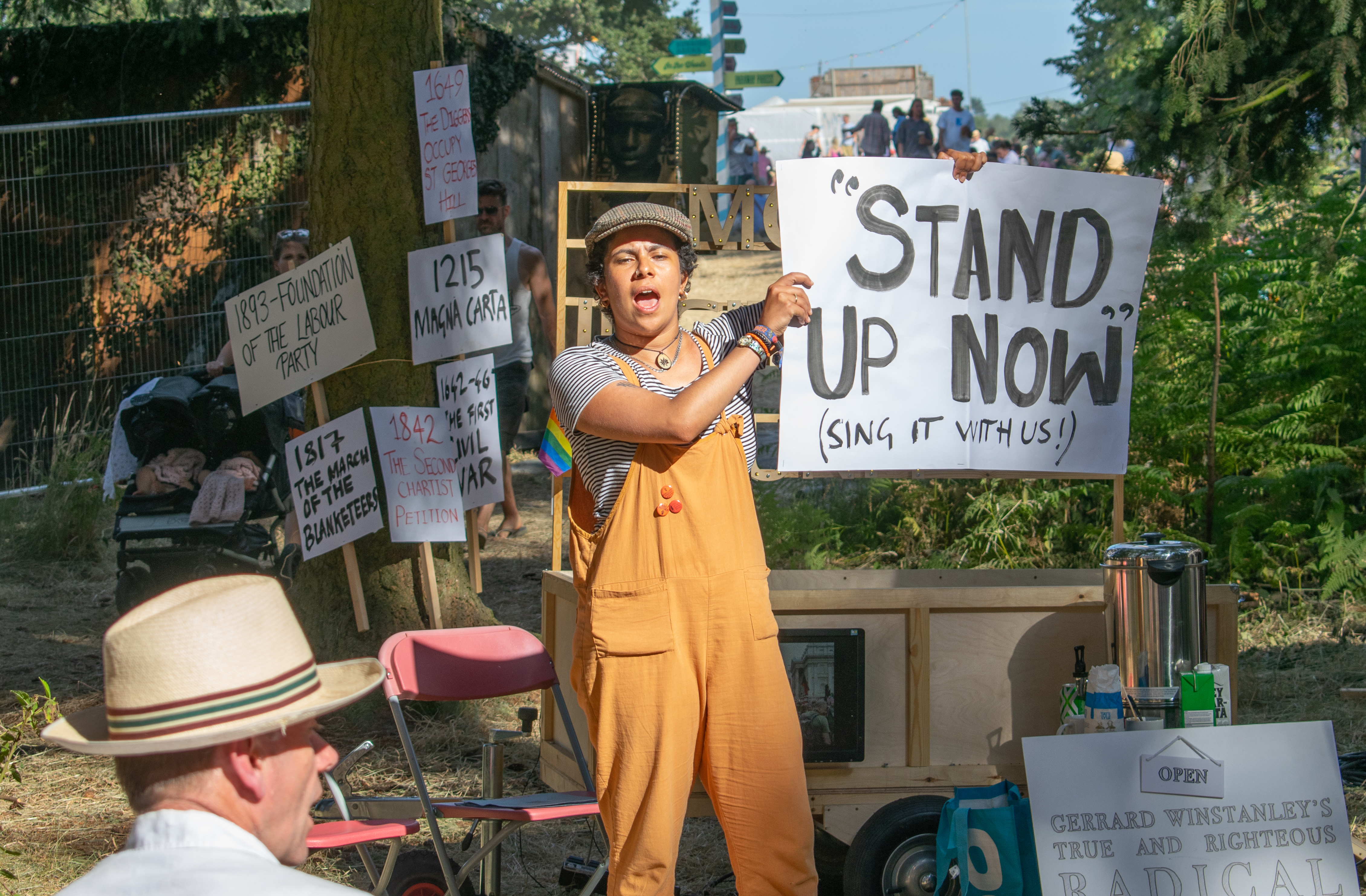
Mobile Incitement at Latitude Festival – Photos: Andy Bannister/Payam Torabi 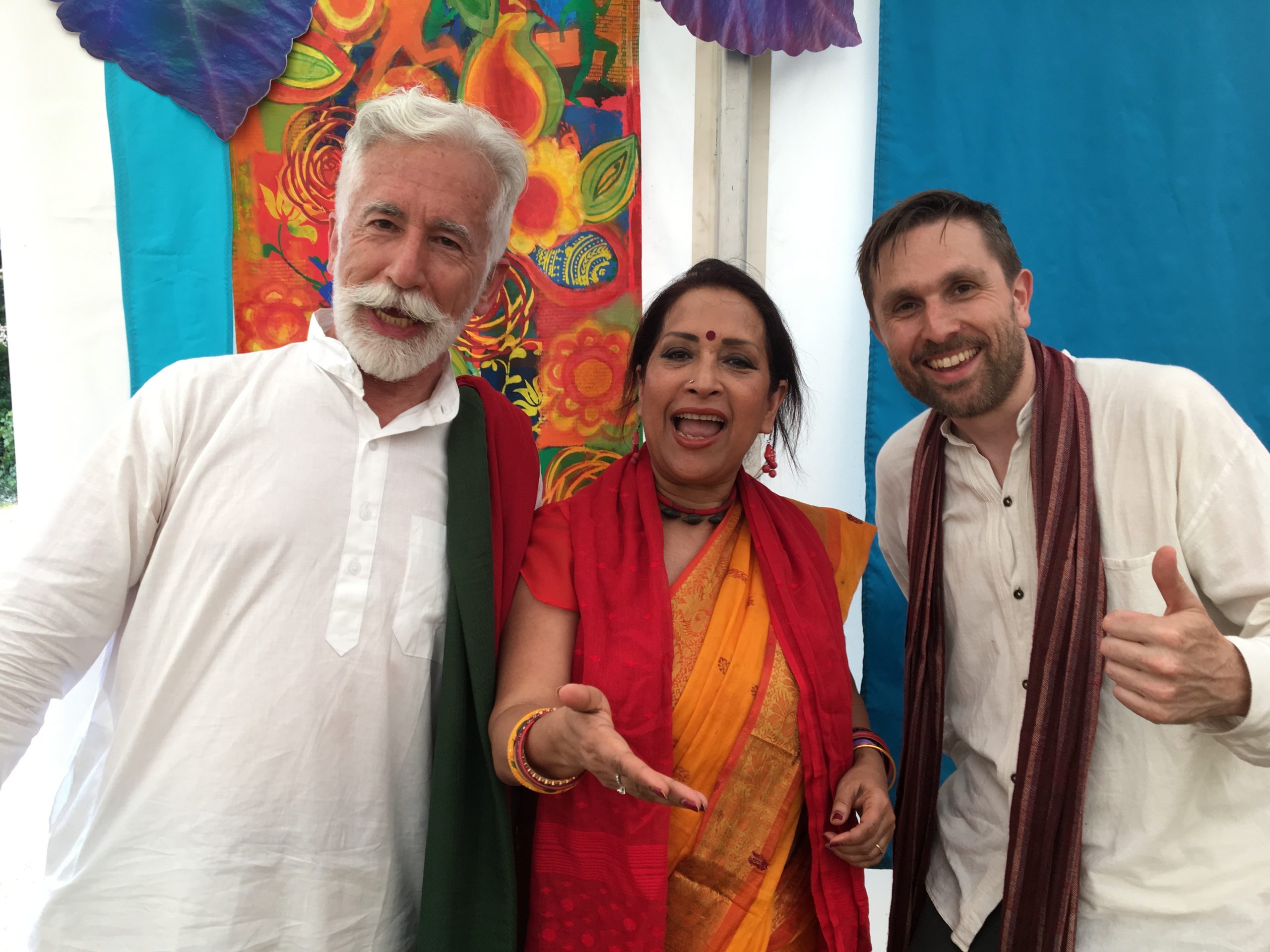
East 3 at the Boishaki Mela 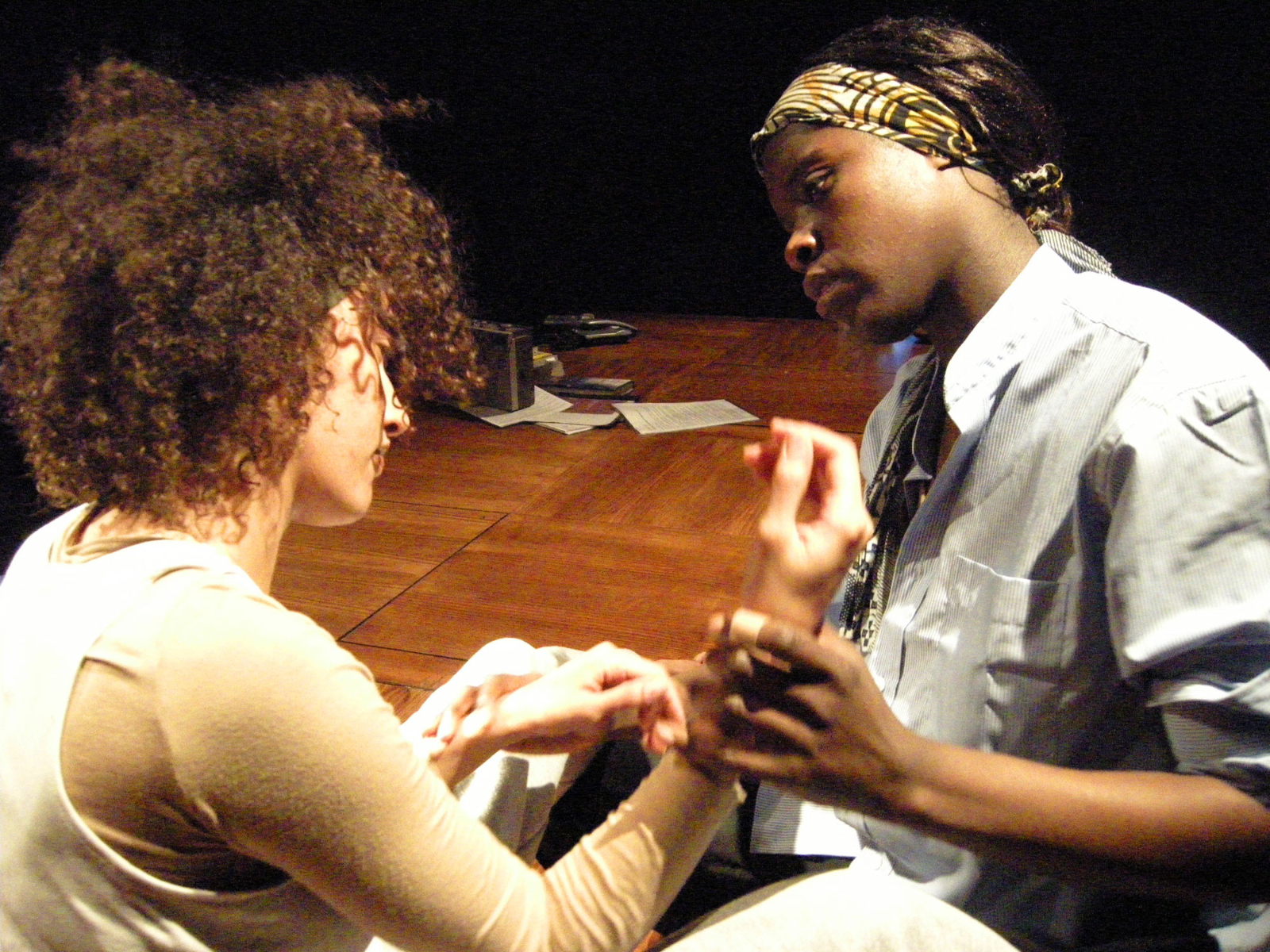
Jennifer Muteteli and Anna-Maria Nabriye in A Place at the Table, CPT 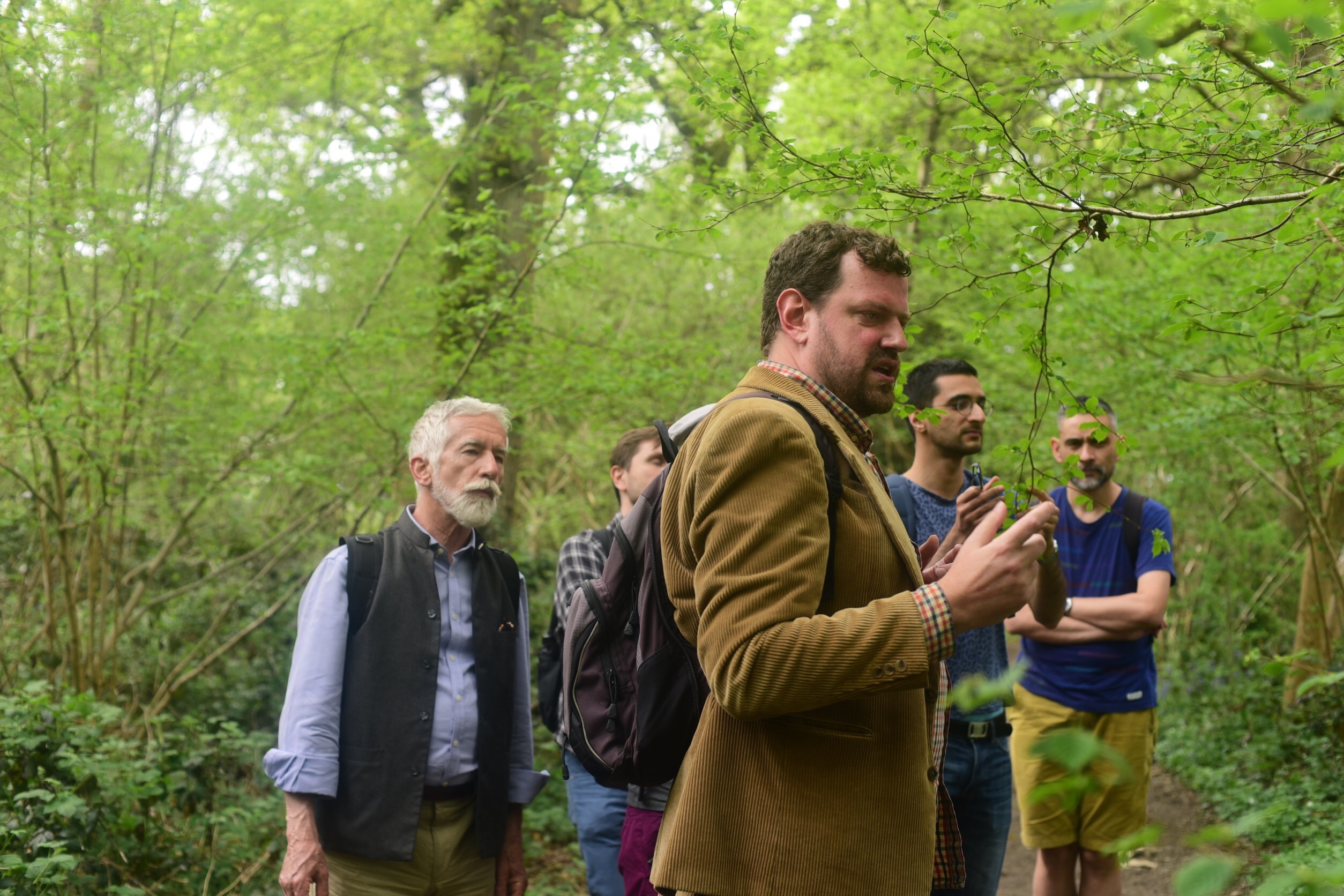
Woodland Walk pilot – Photo: Tan Nidhivir 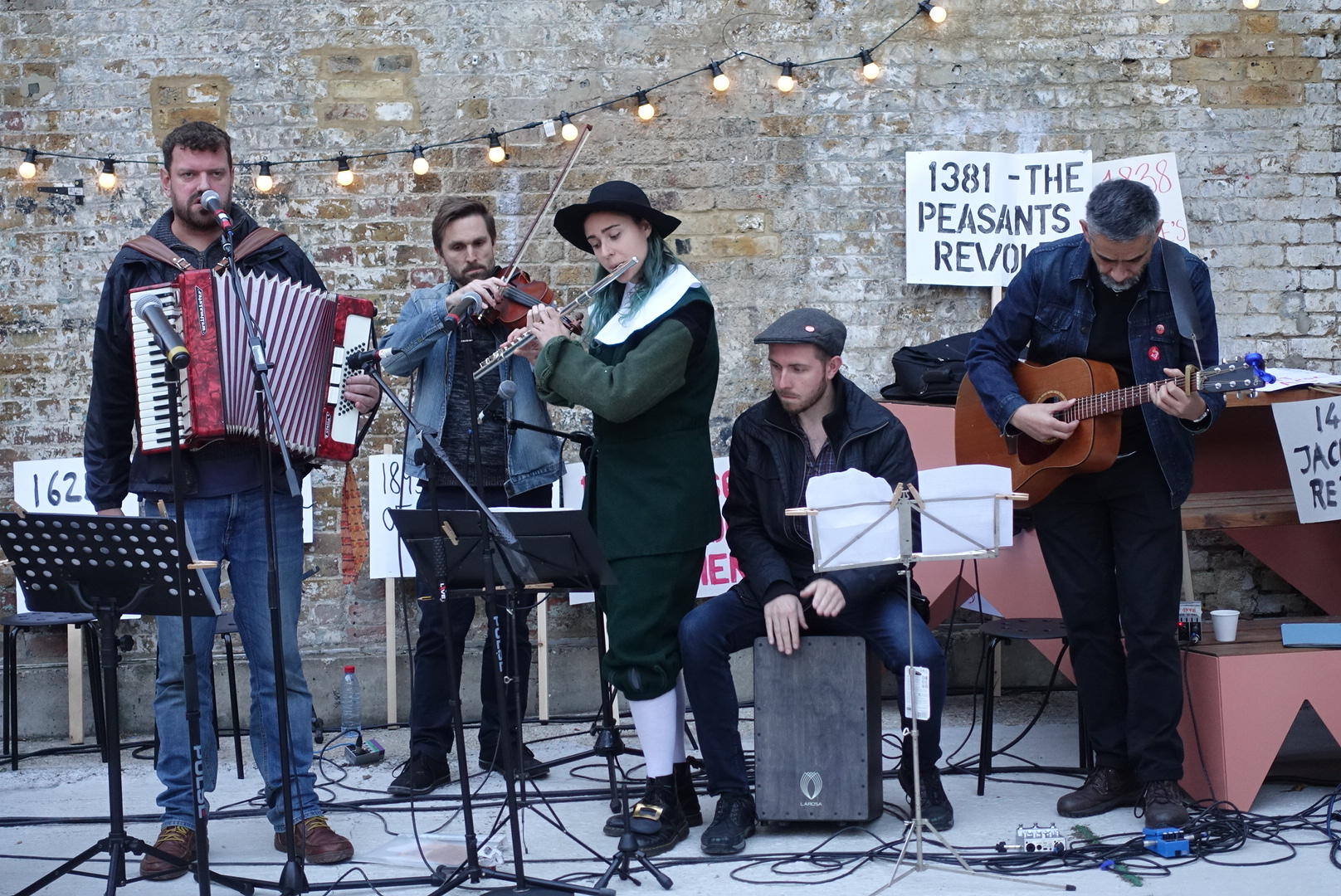
Mobile Incitement at Brixton City Festival 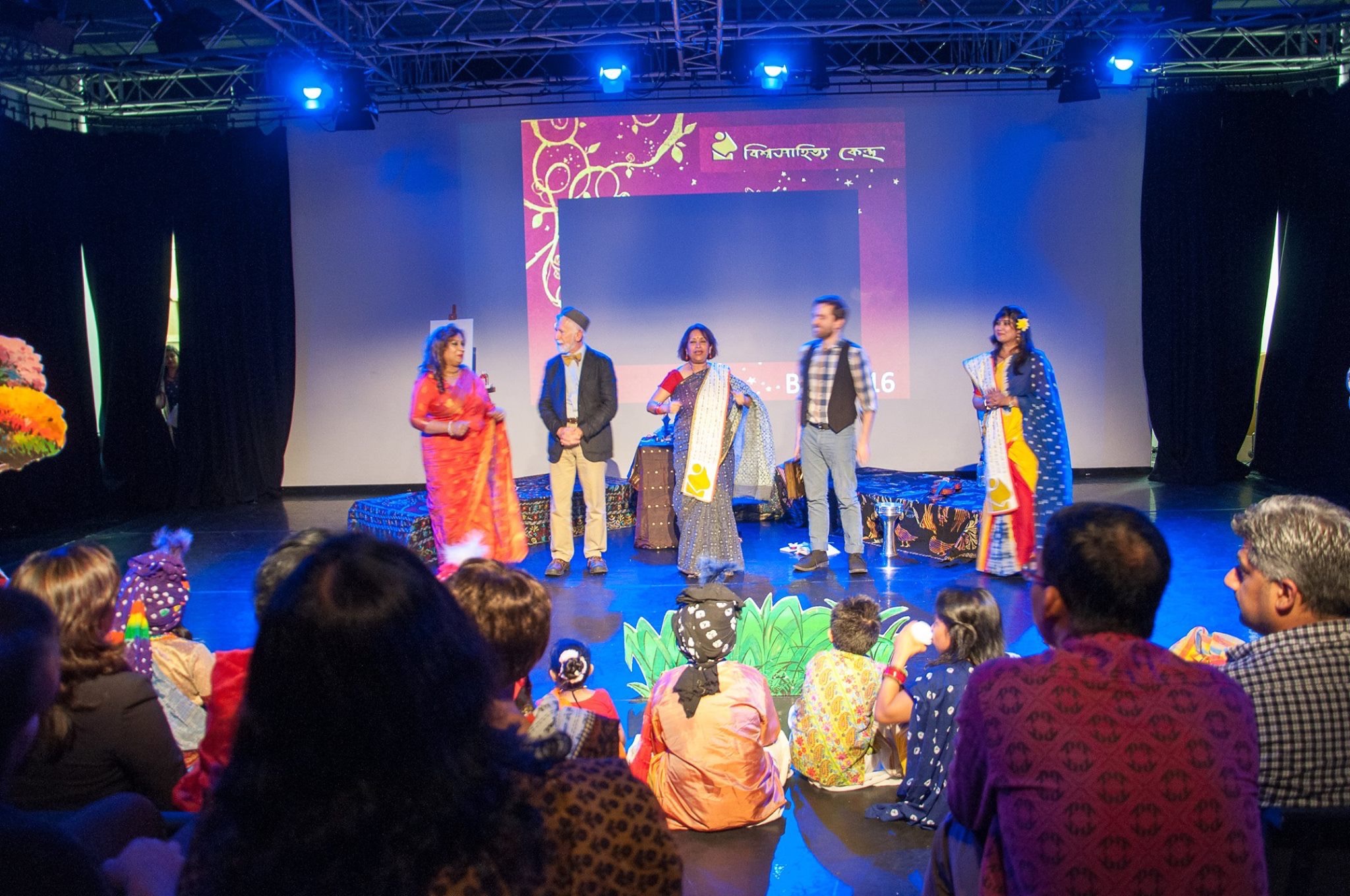
East at Boi-Lit 16 – photo by Shoayeeb Chamak for BSK 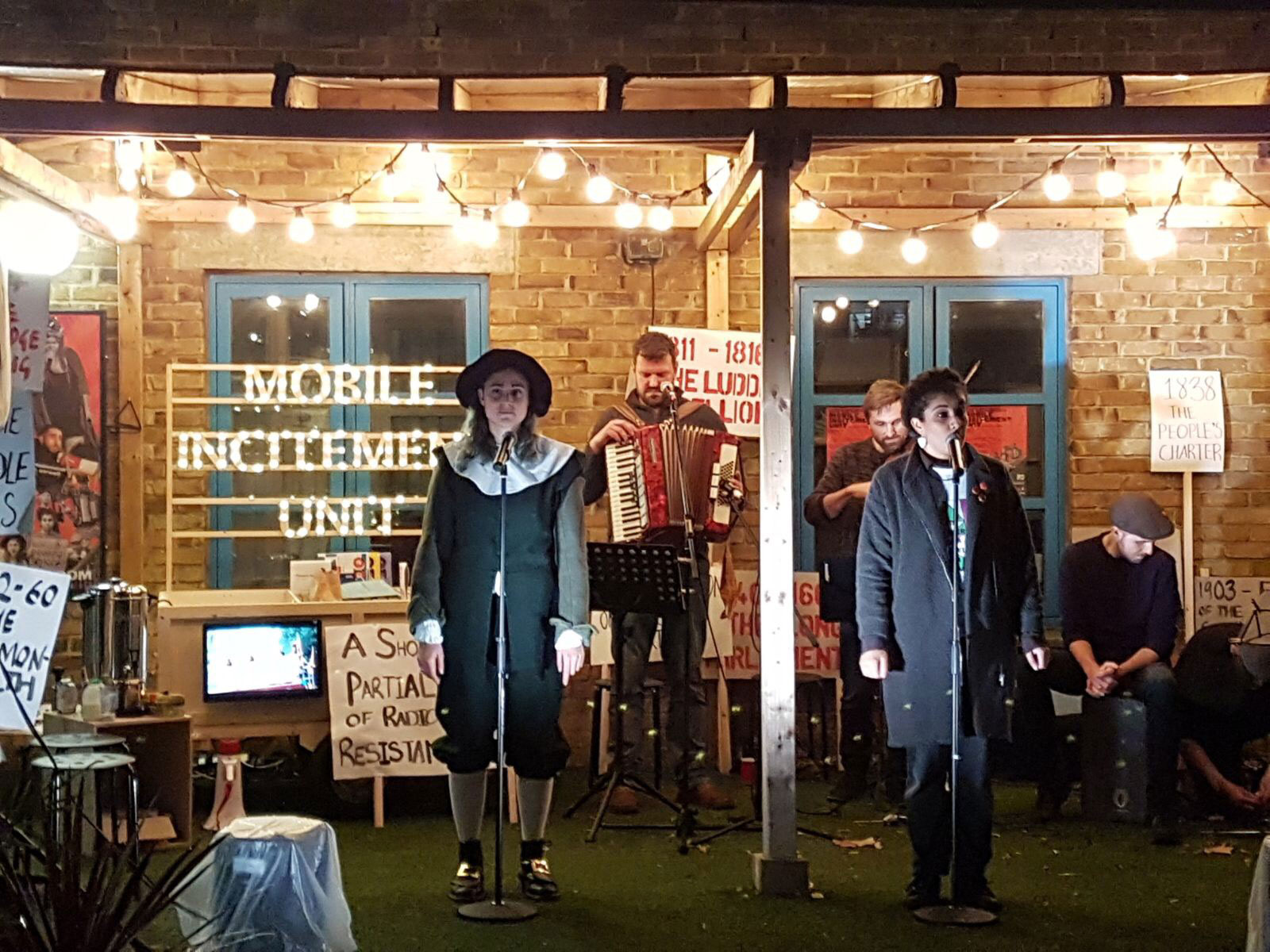
Mobile Incitement at Ovalhouse 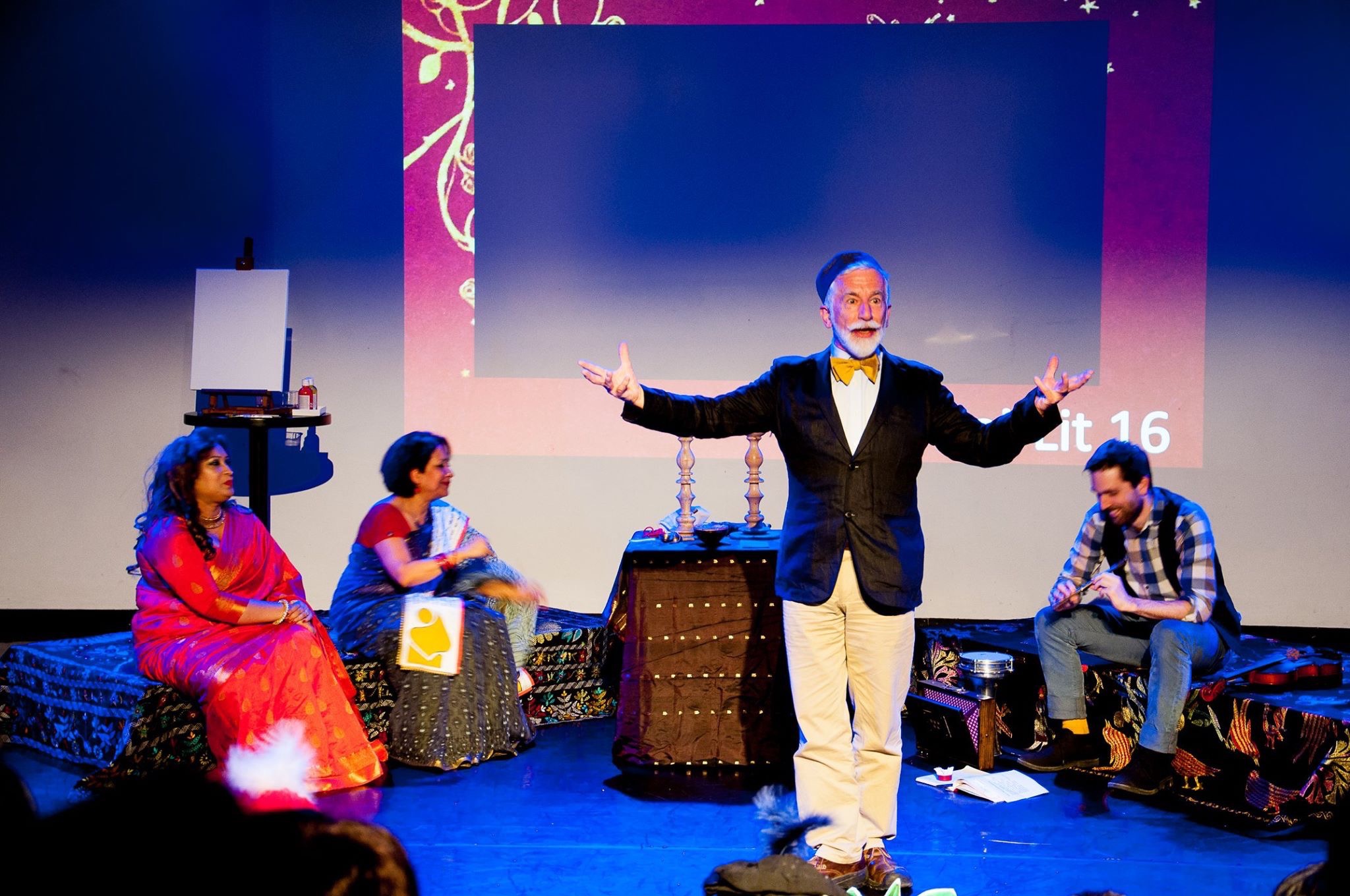
East at Boi-Lit 16 – photo by Shoayeeb Chamak for BSK 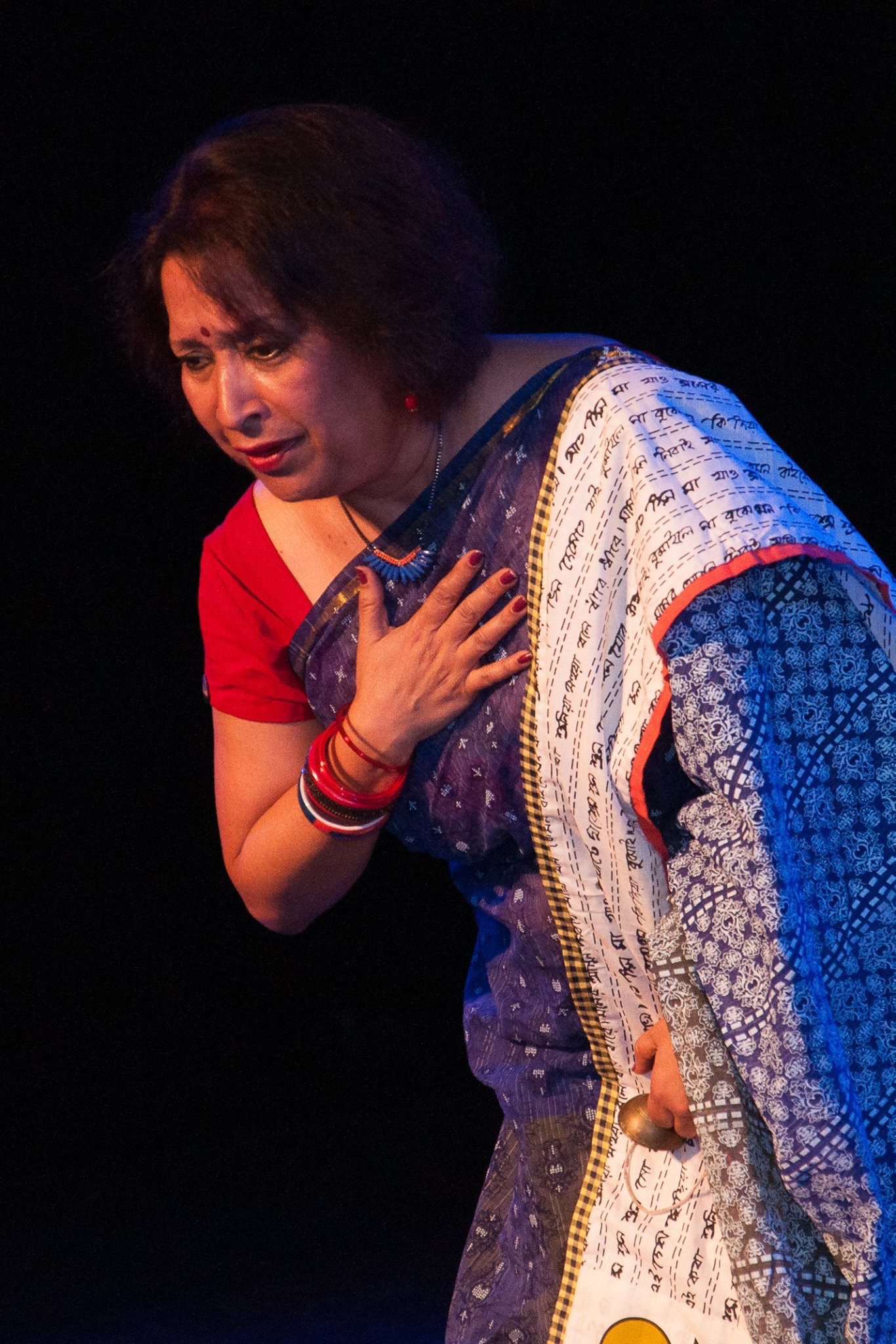
East at Boi-Lit 16 – photo by Shoayeeb Chamak for BSK 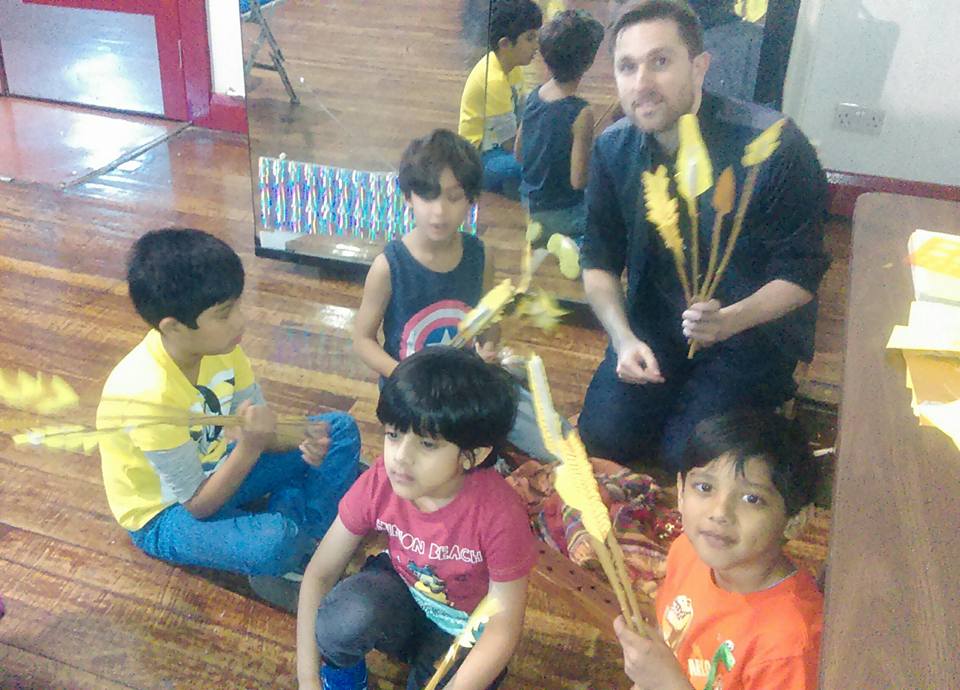
An East Storytelling holiday workshop 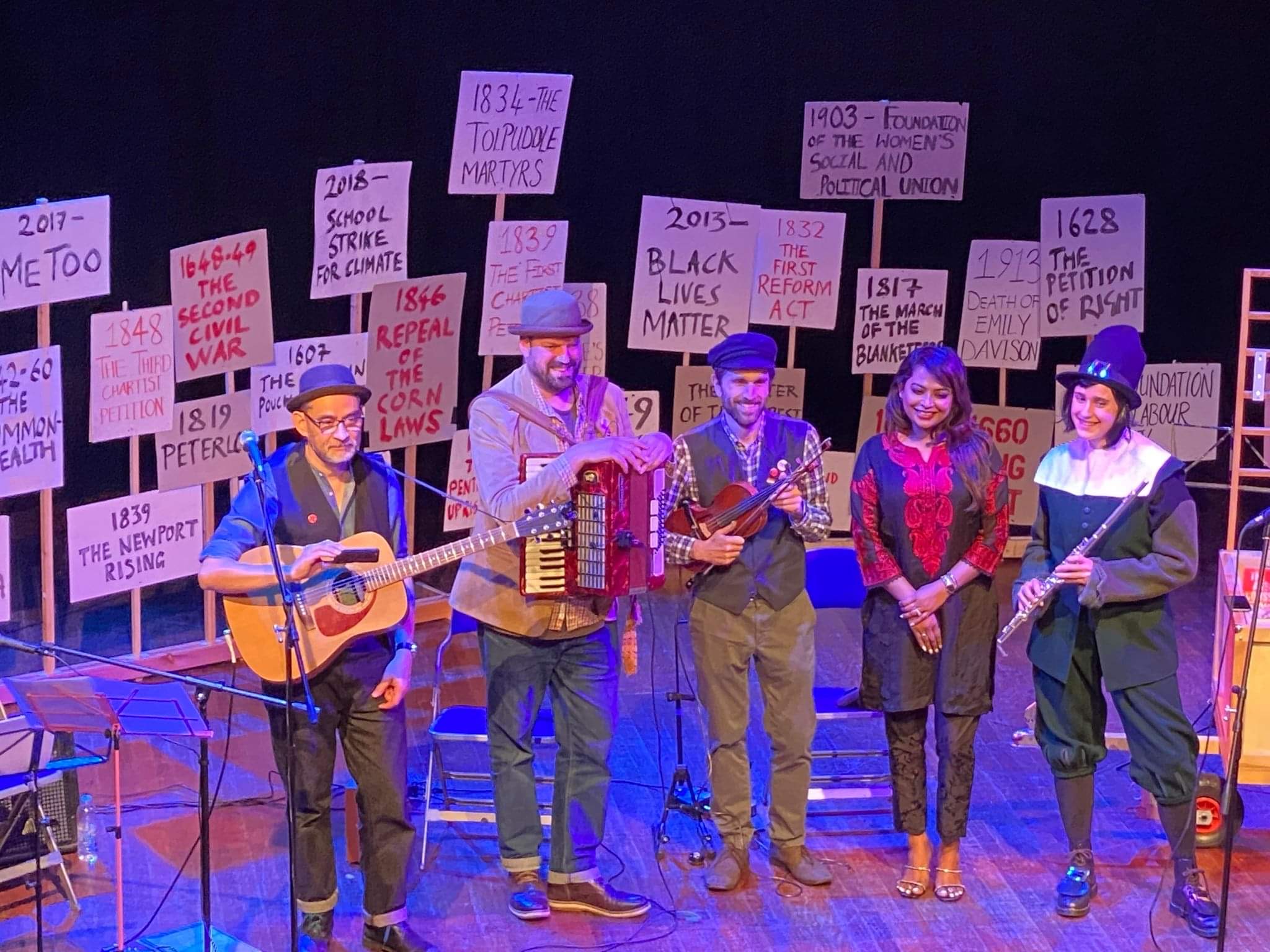
Mobile Incitement at the Freedom and Independence Festival 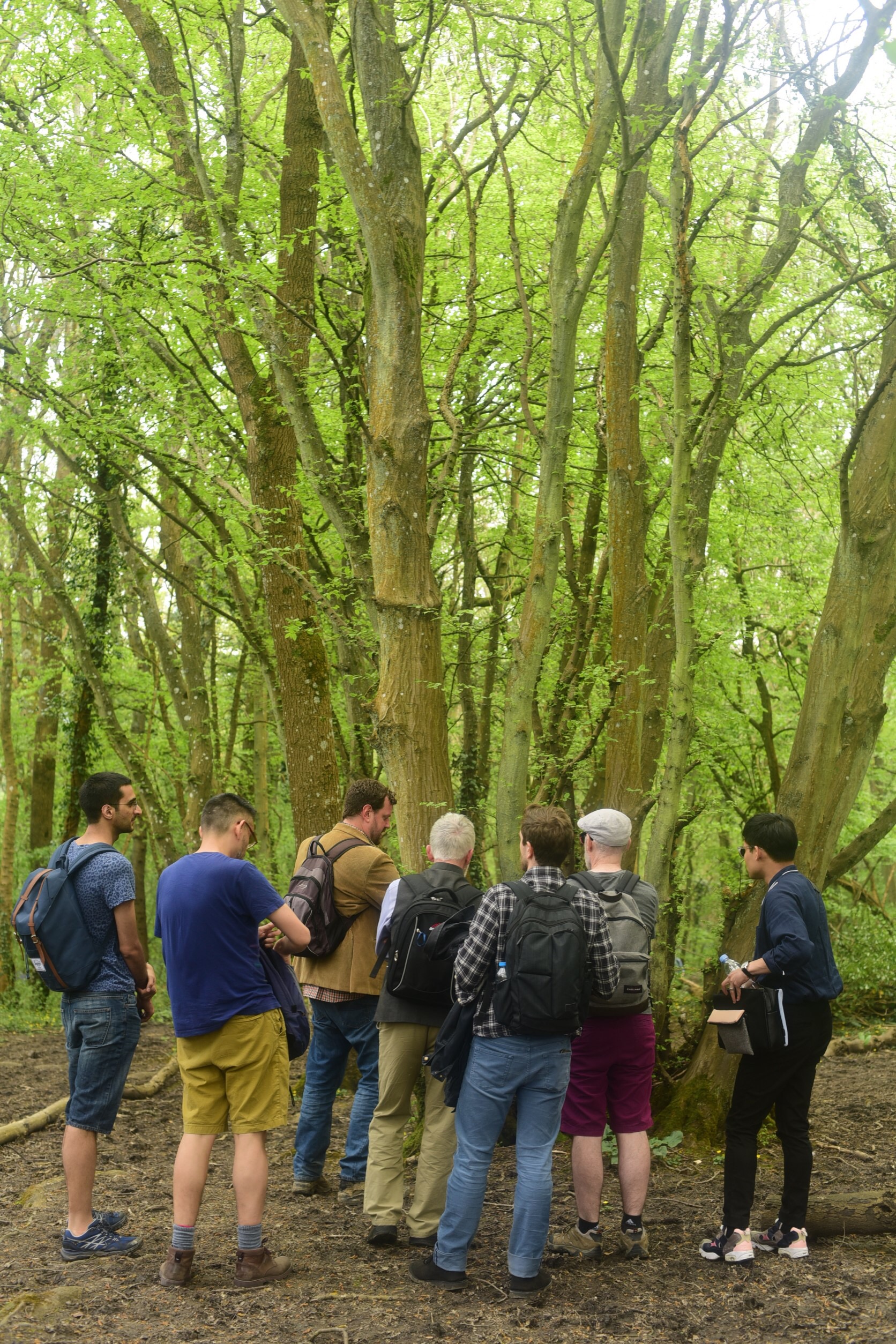
Woodland Walk pilot – Photo: Tan Nidhivir 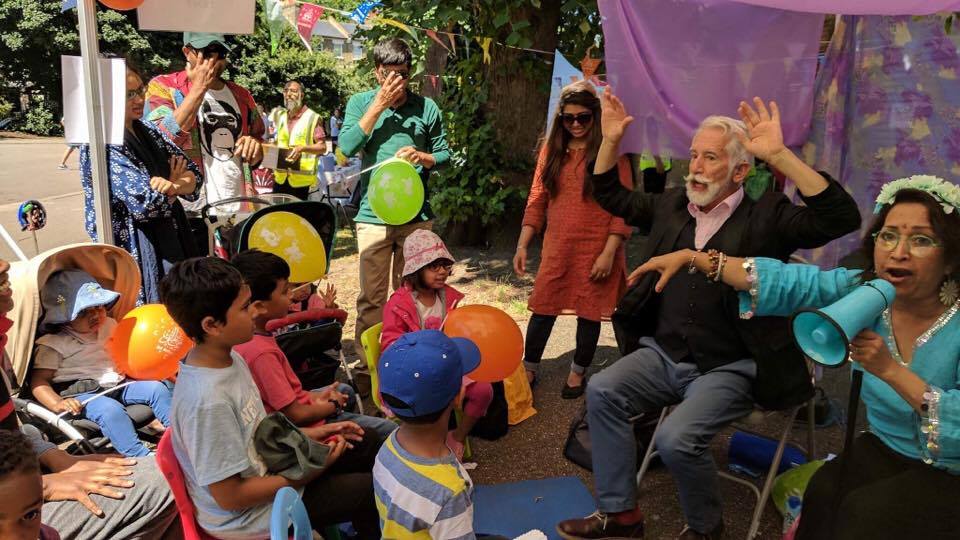
East Storytelling at The Big Day Out, Victoria Park 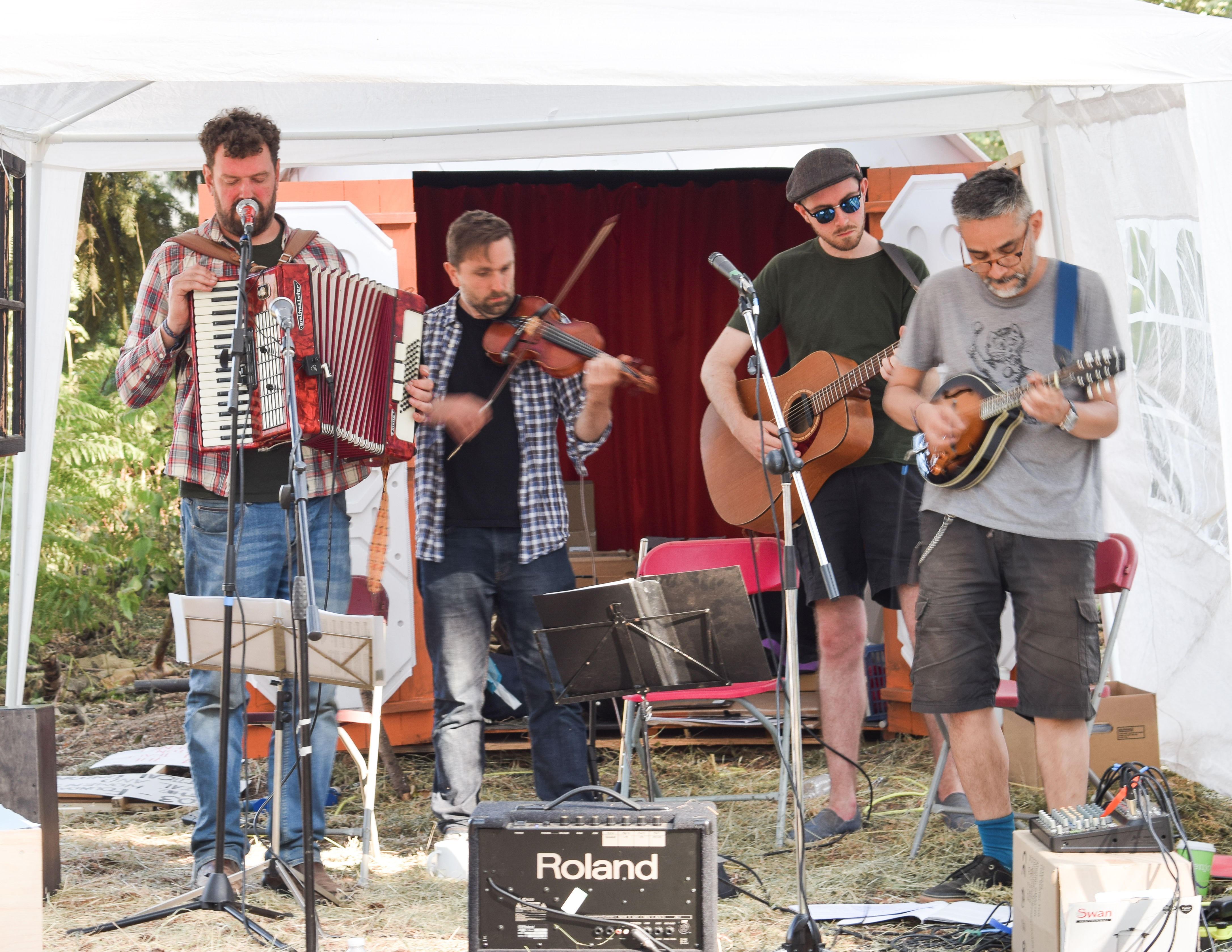
Mobile Incitement at Latitude Festival – Photos: Andy Bannister/Payam Torabi 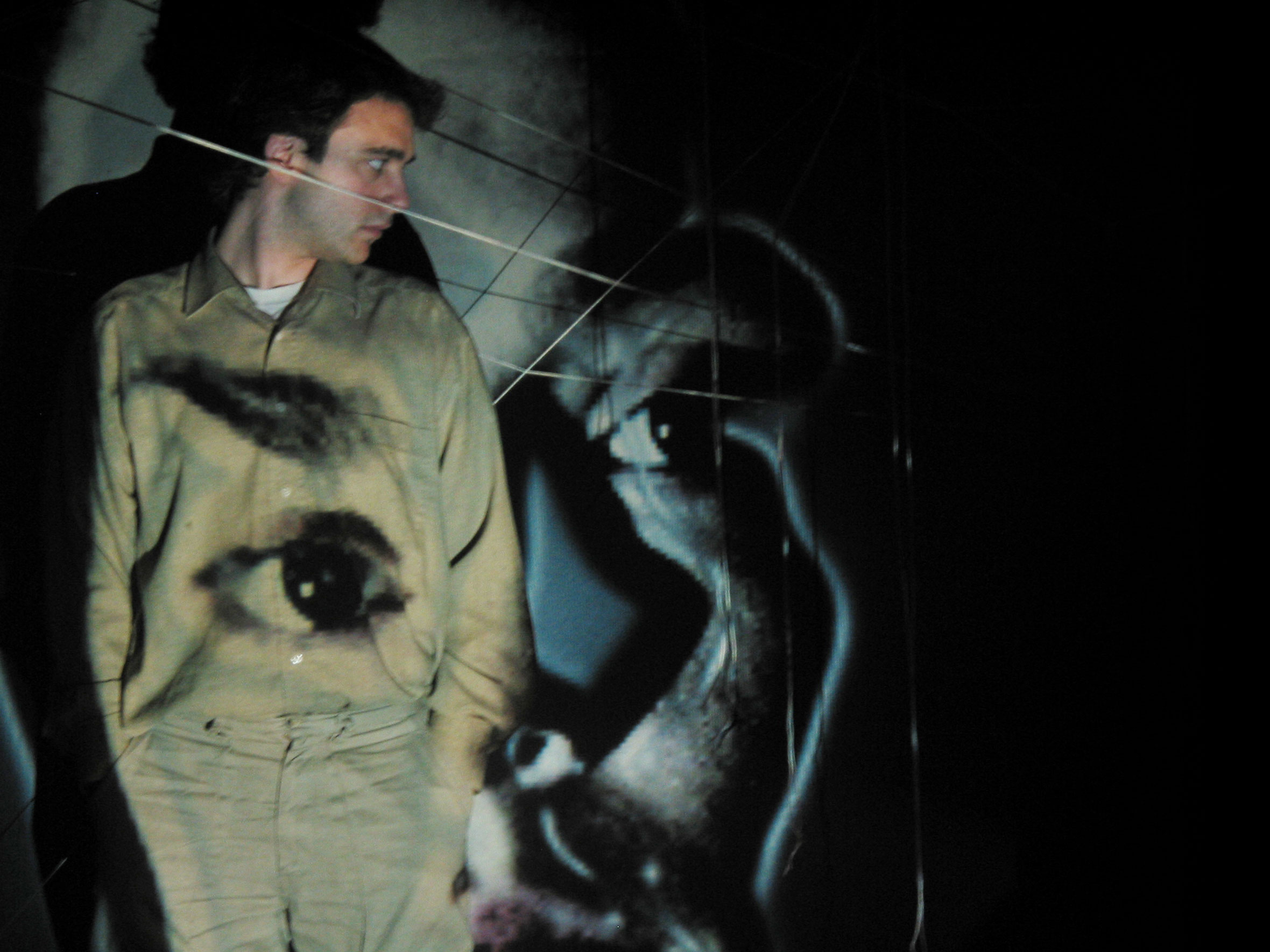
Onur Orkut in Selfish, The Arches, Glasgow 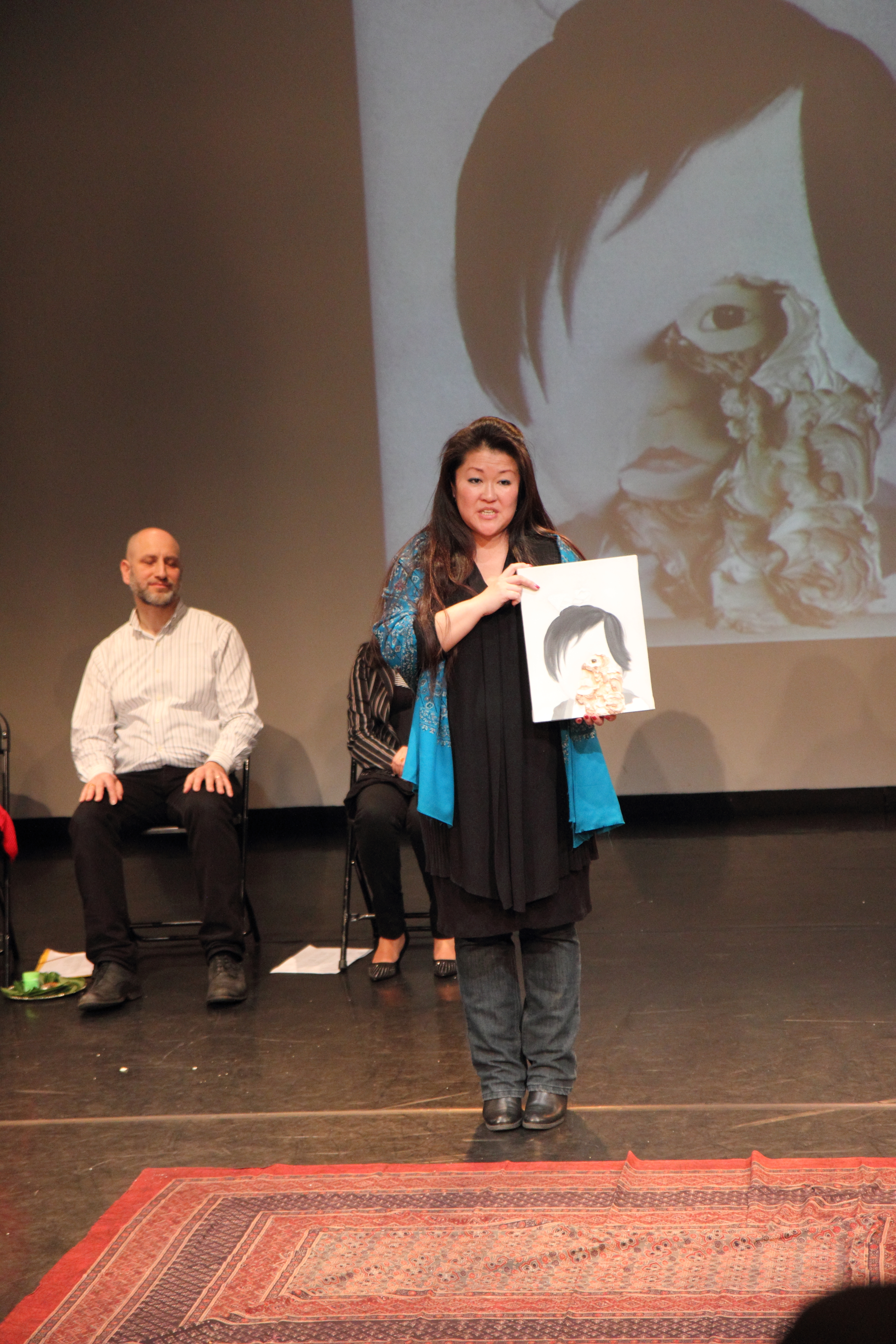
East at Rich Mix – Photo: Simon Daw 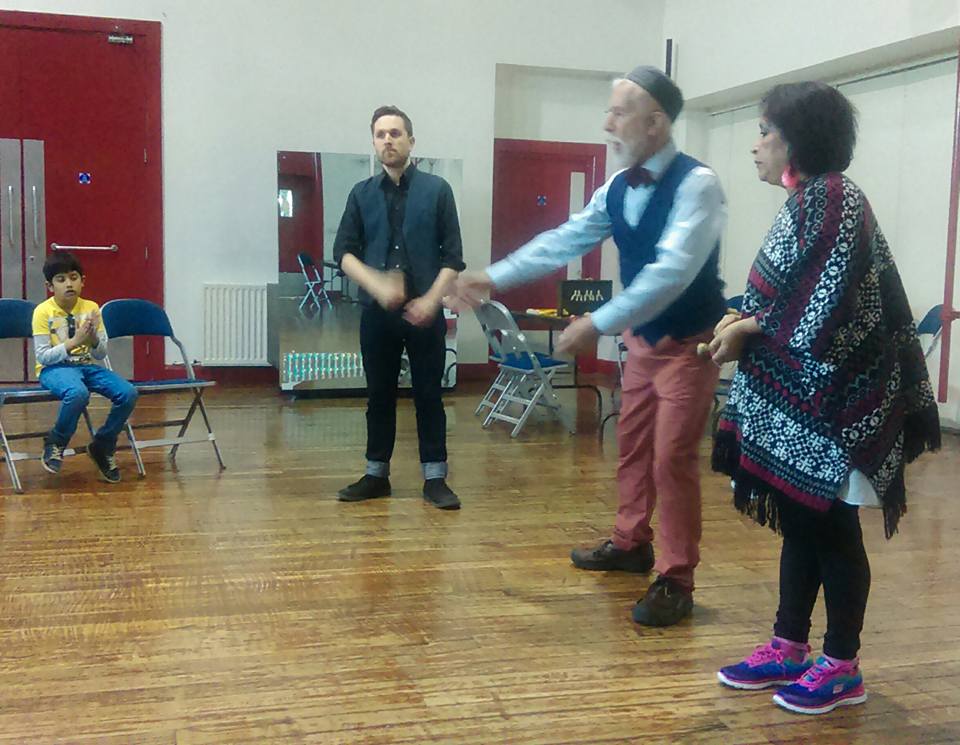
An East Storytelling holiday workshop 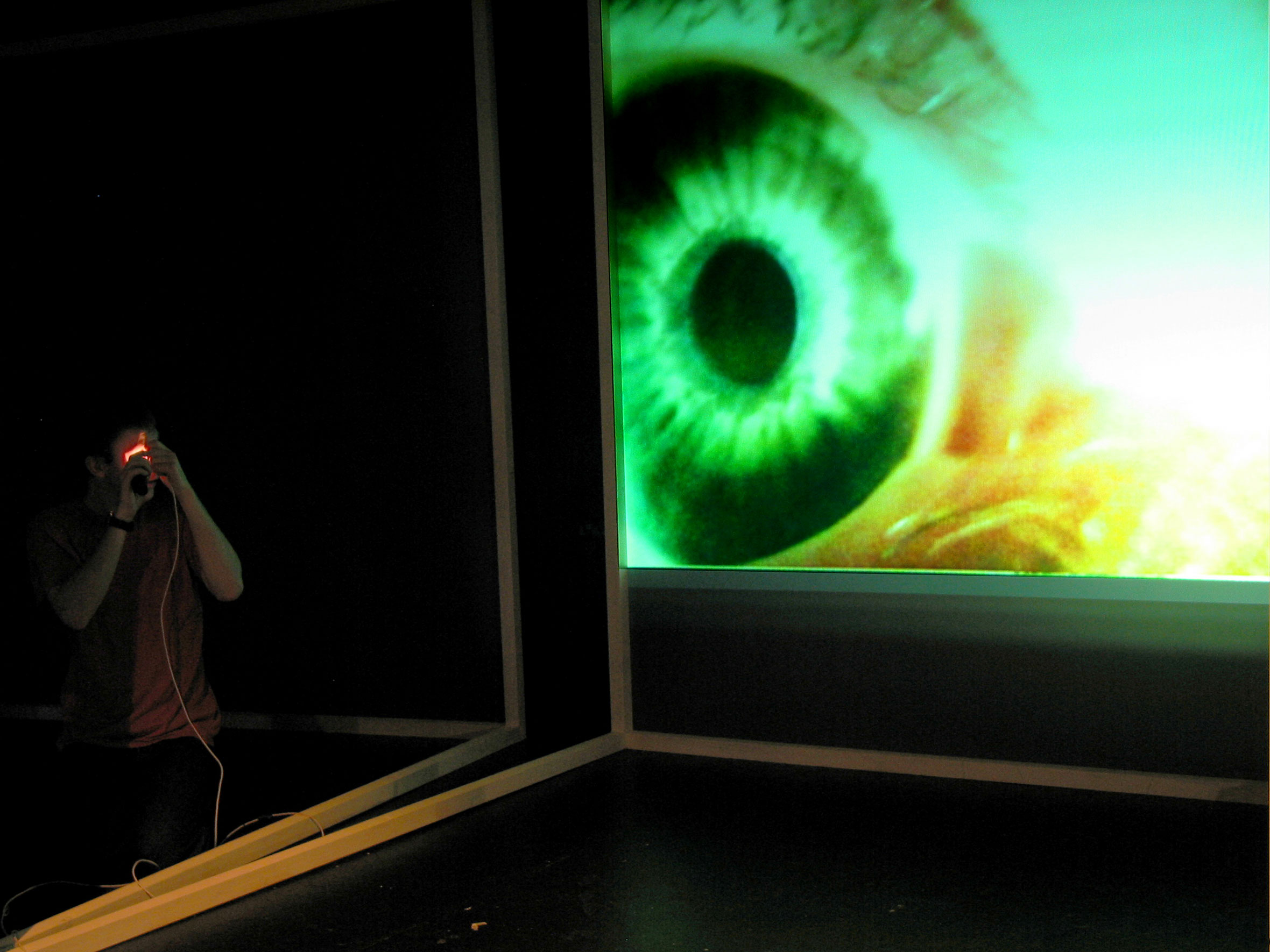
Graeme Mackay in Selfish, the Arches, Glasgow 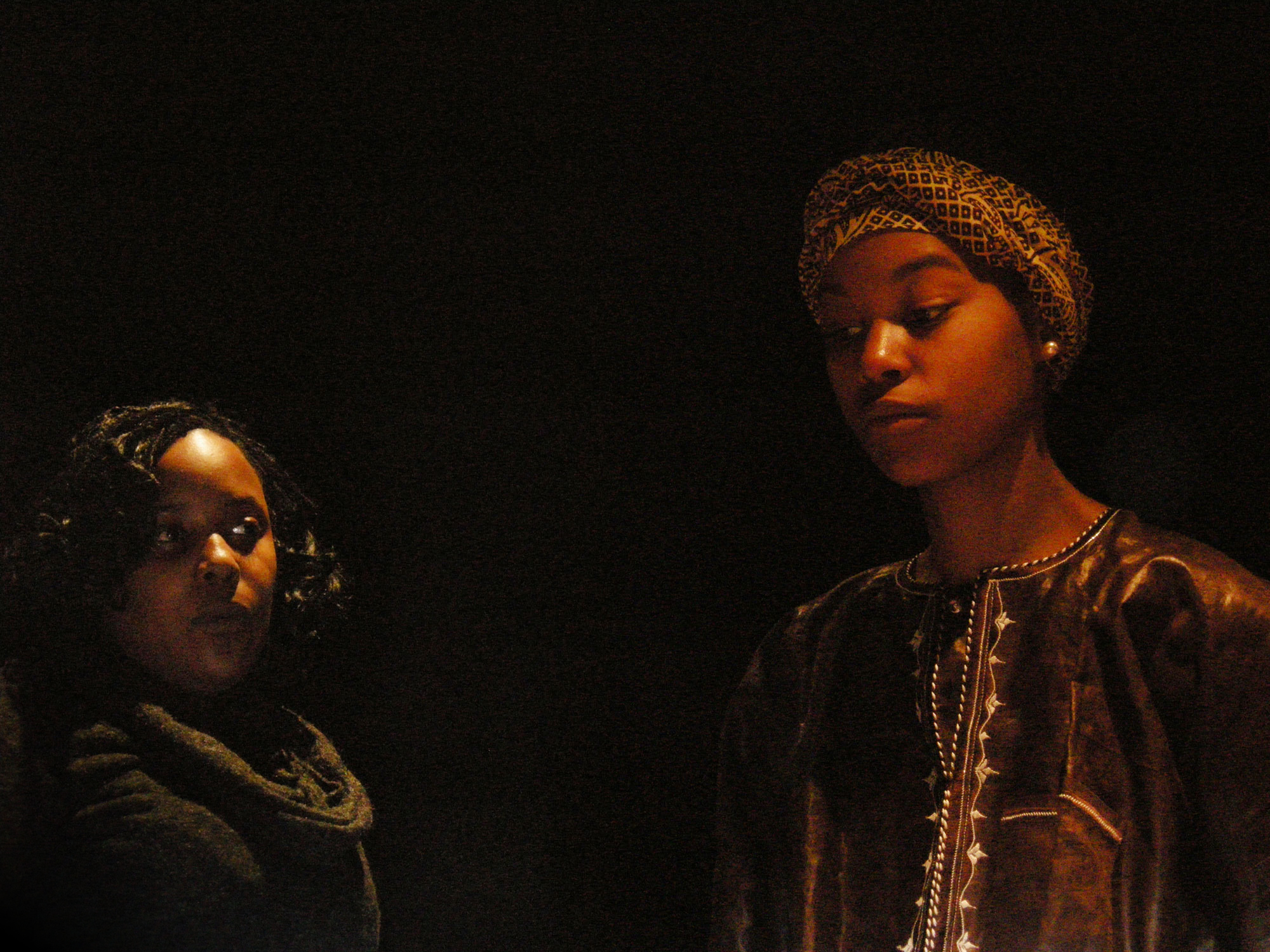
Grace Nyandoro and Seboelo Majozi 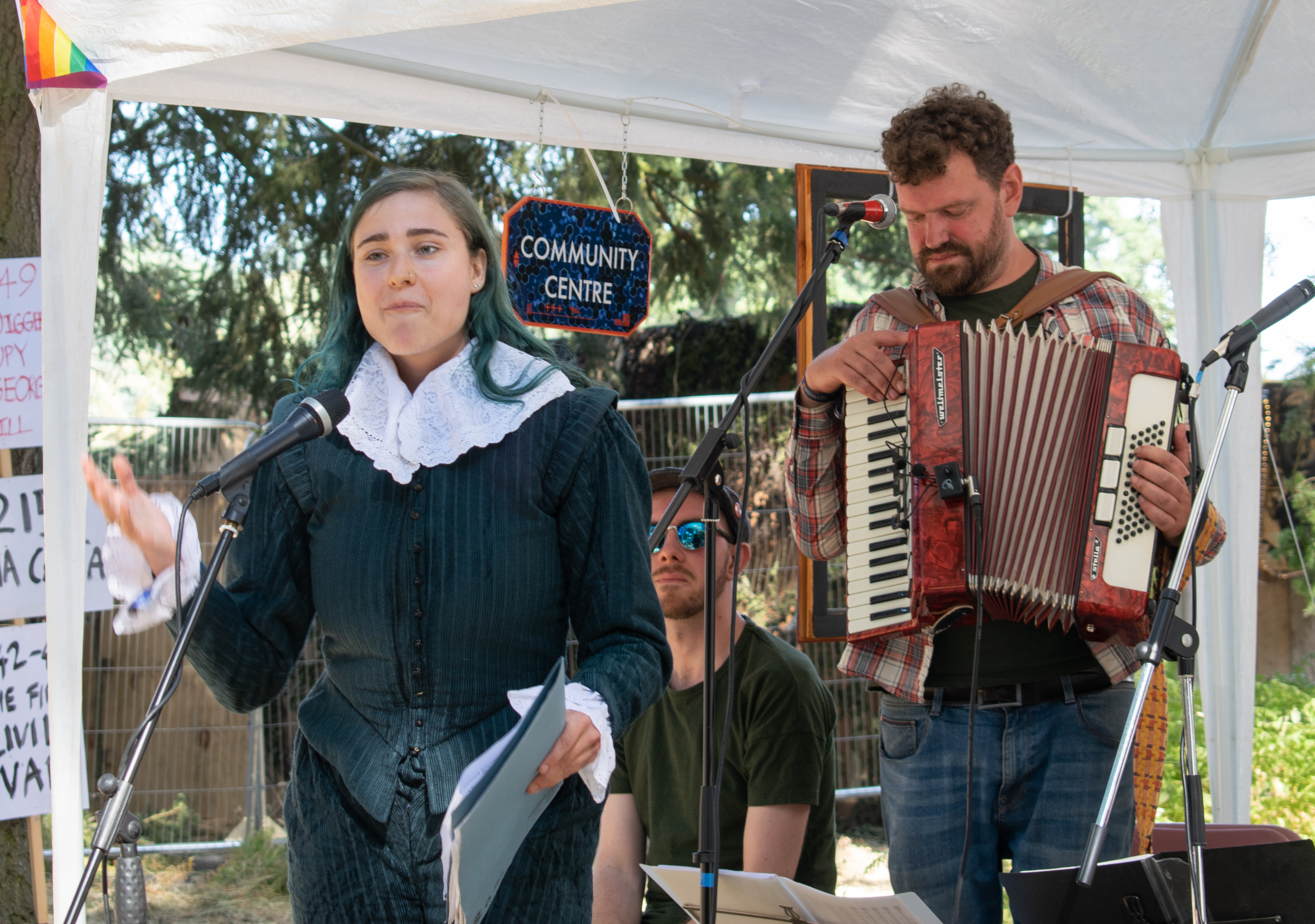
Mobile Incitement at Latitude Festival – Photos: Andy Bannister/Payam Torabi 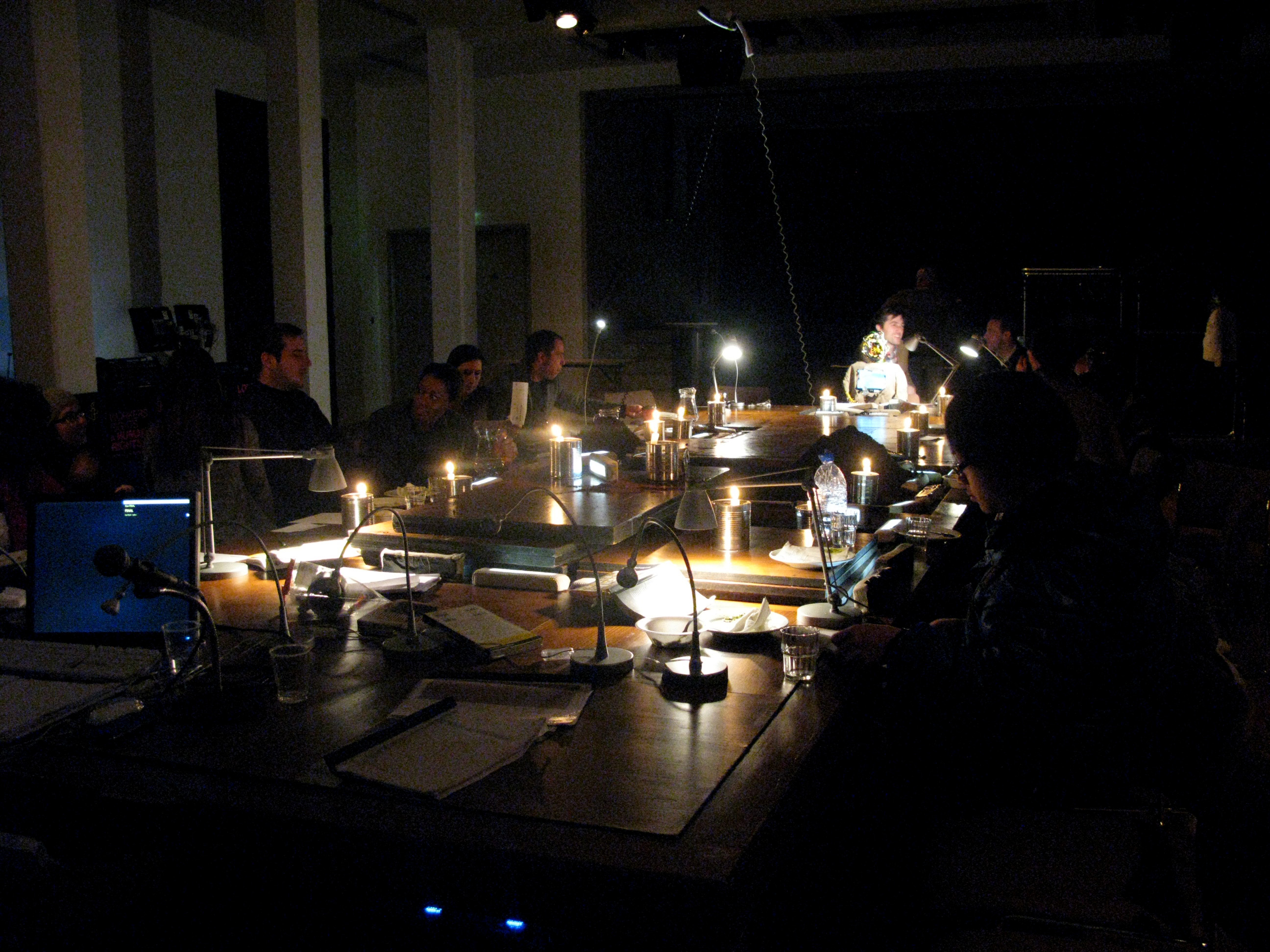
APATT at AIUK – Photo: Harriet Stewart 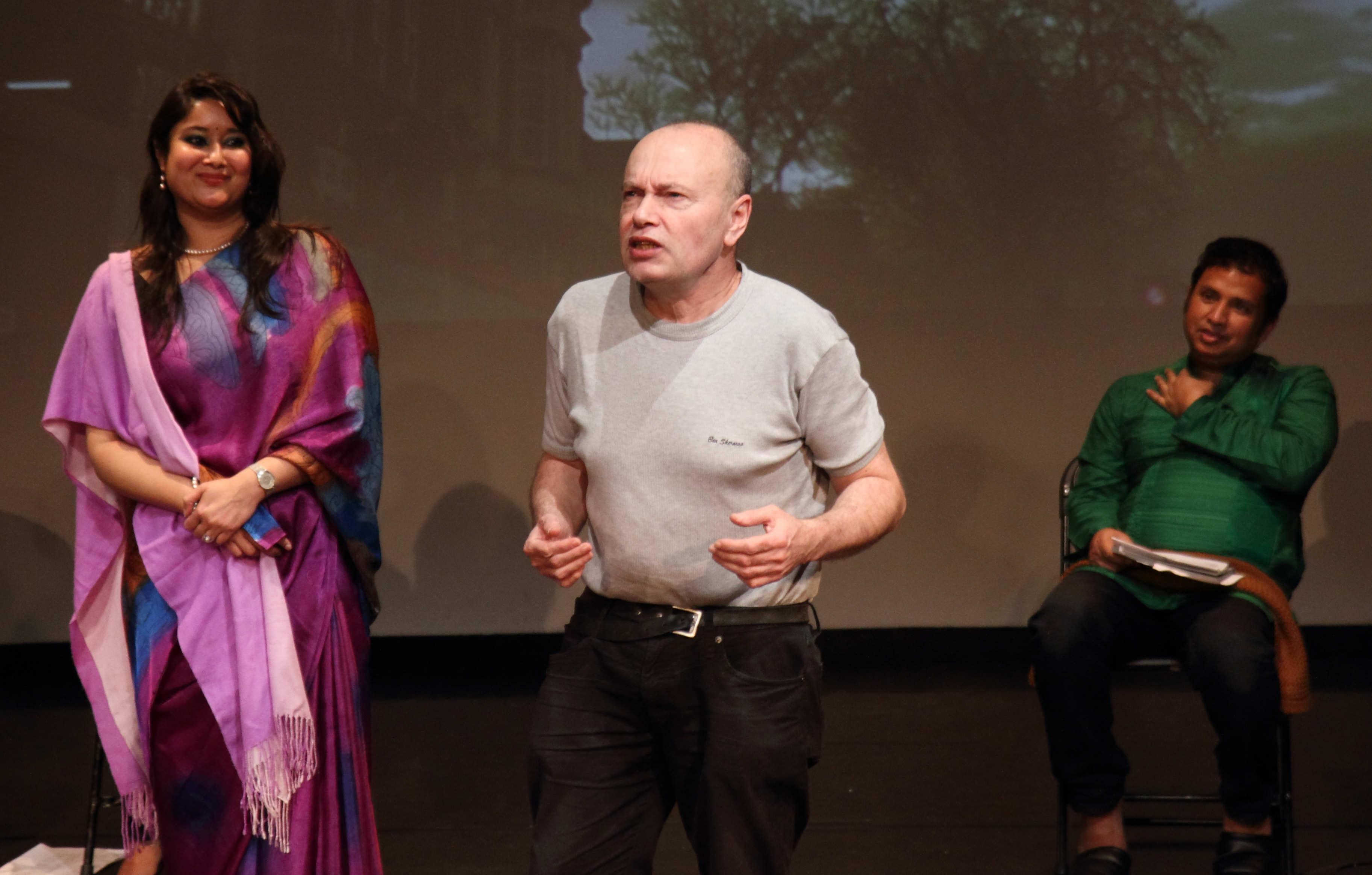
East at Rich Mix – Photo: Simon Daw 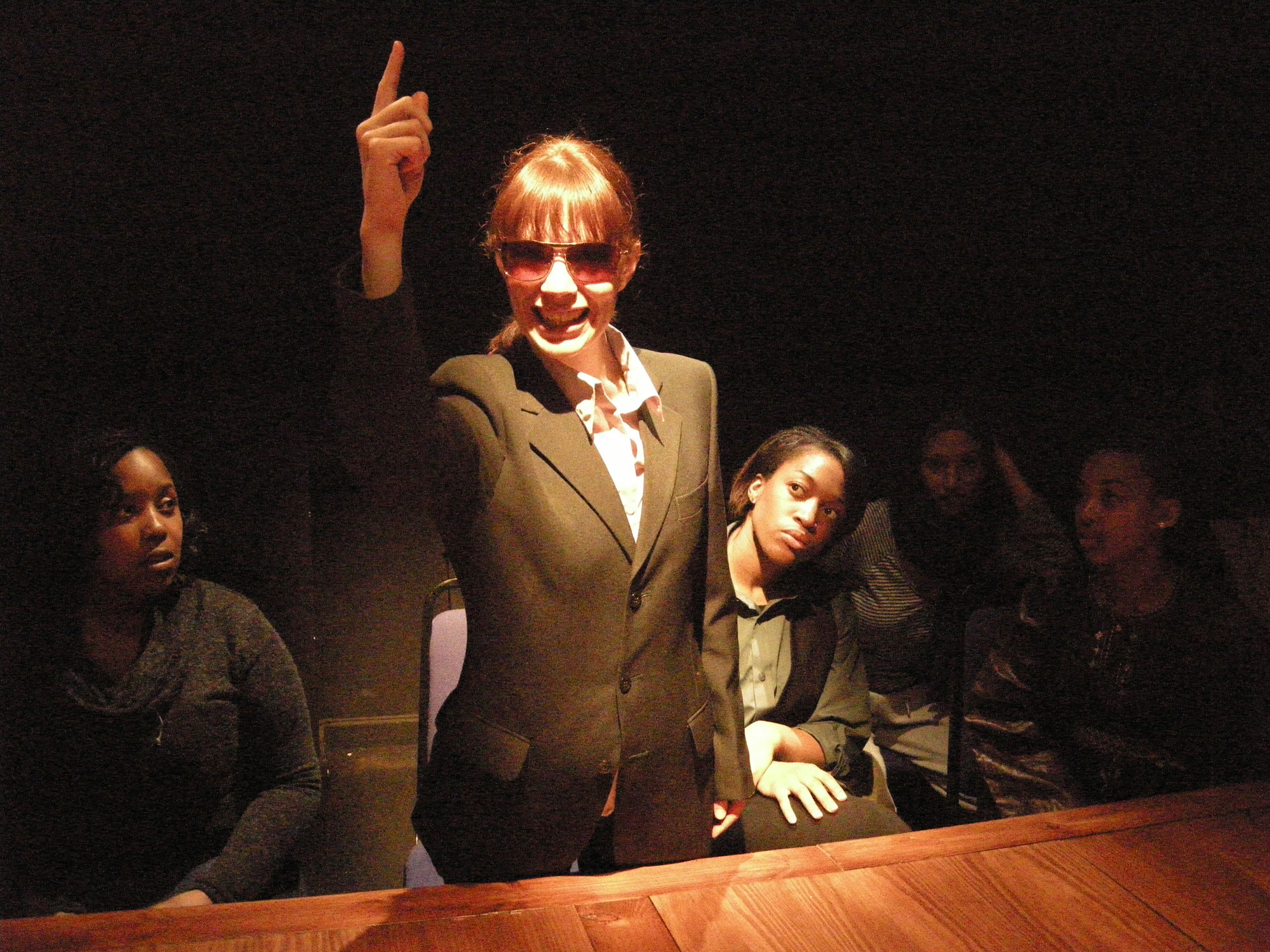
Susan Worsfold in A Place at the Table, CPT 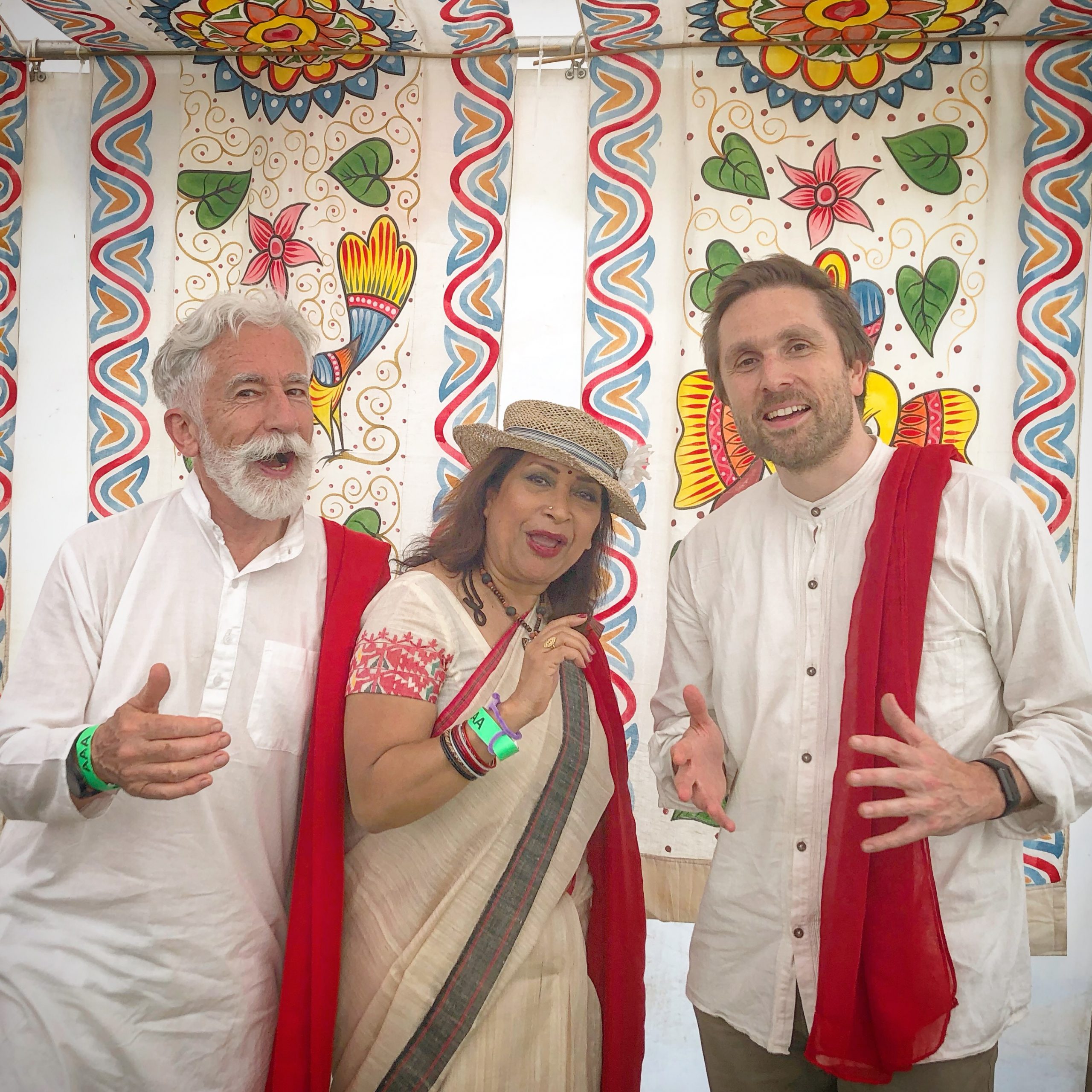
Sef, Shamim and Paul at Boishakhi Mela 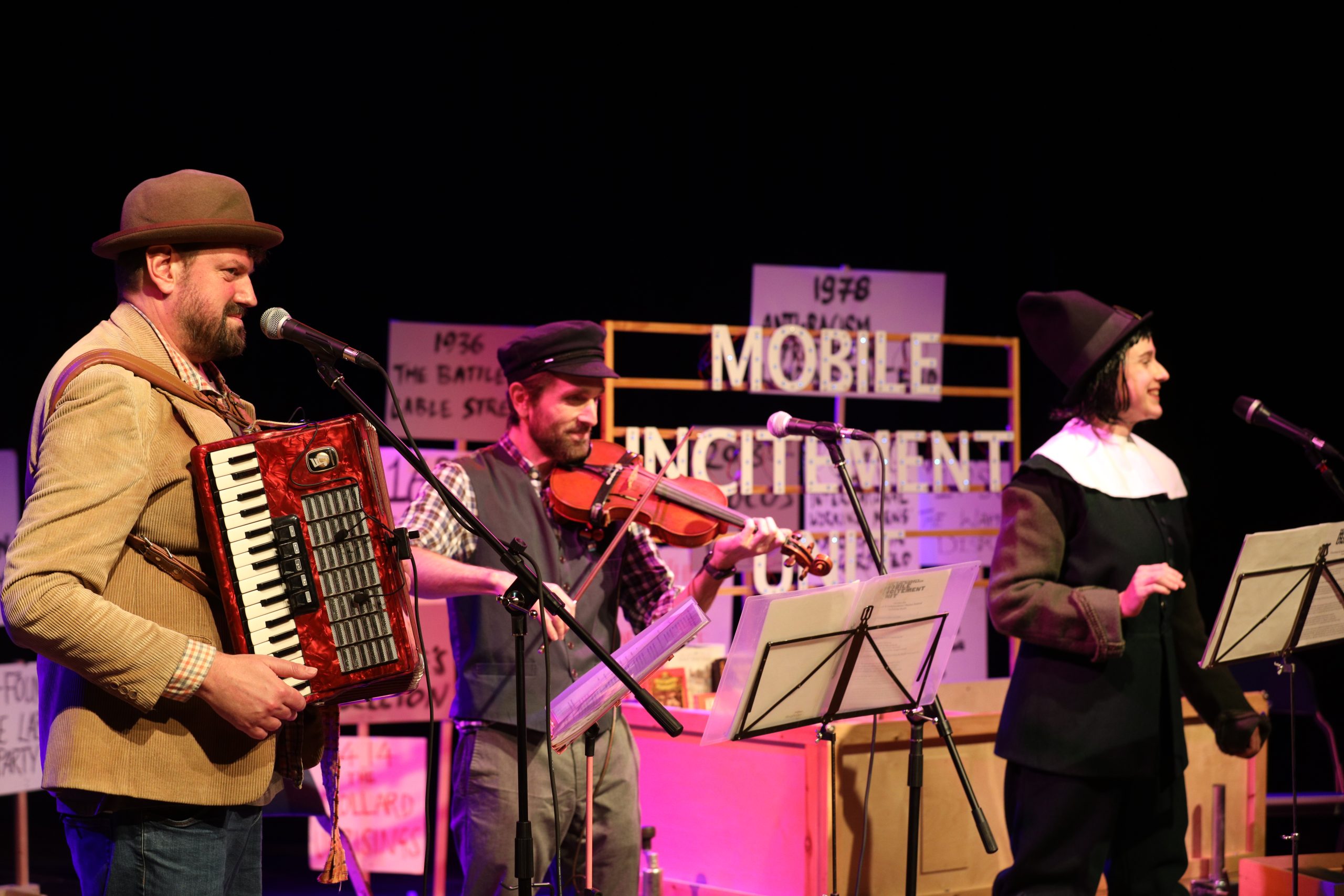
London, United Kingdom – Friday 05 November 2021, LBTH, FITF – Daedalus Theatre Company, Gerrard Winstanley’s Mobile Incitement Unit. 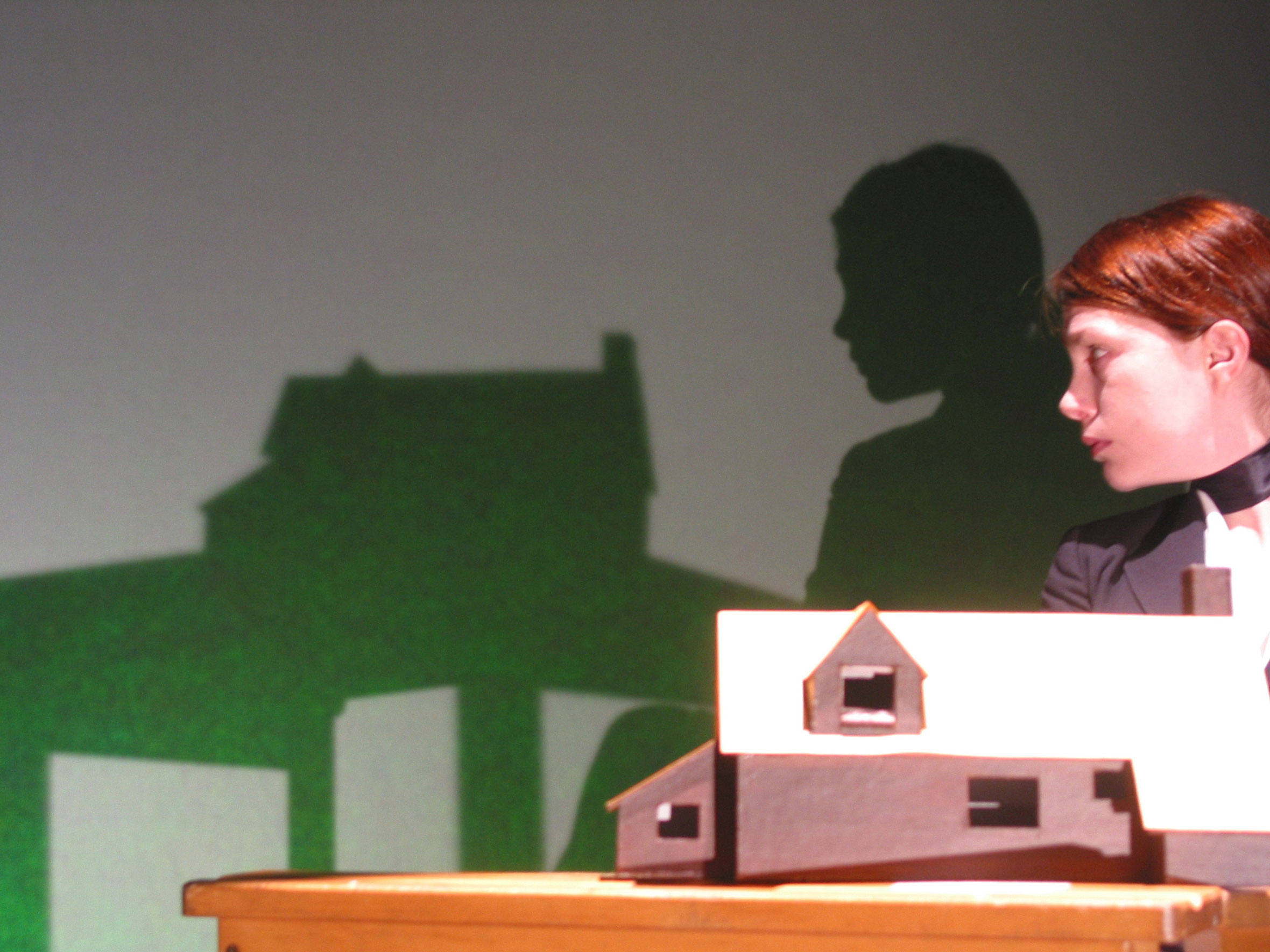
Susan Worsfold in Selfish 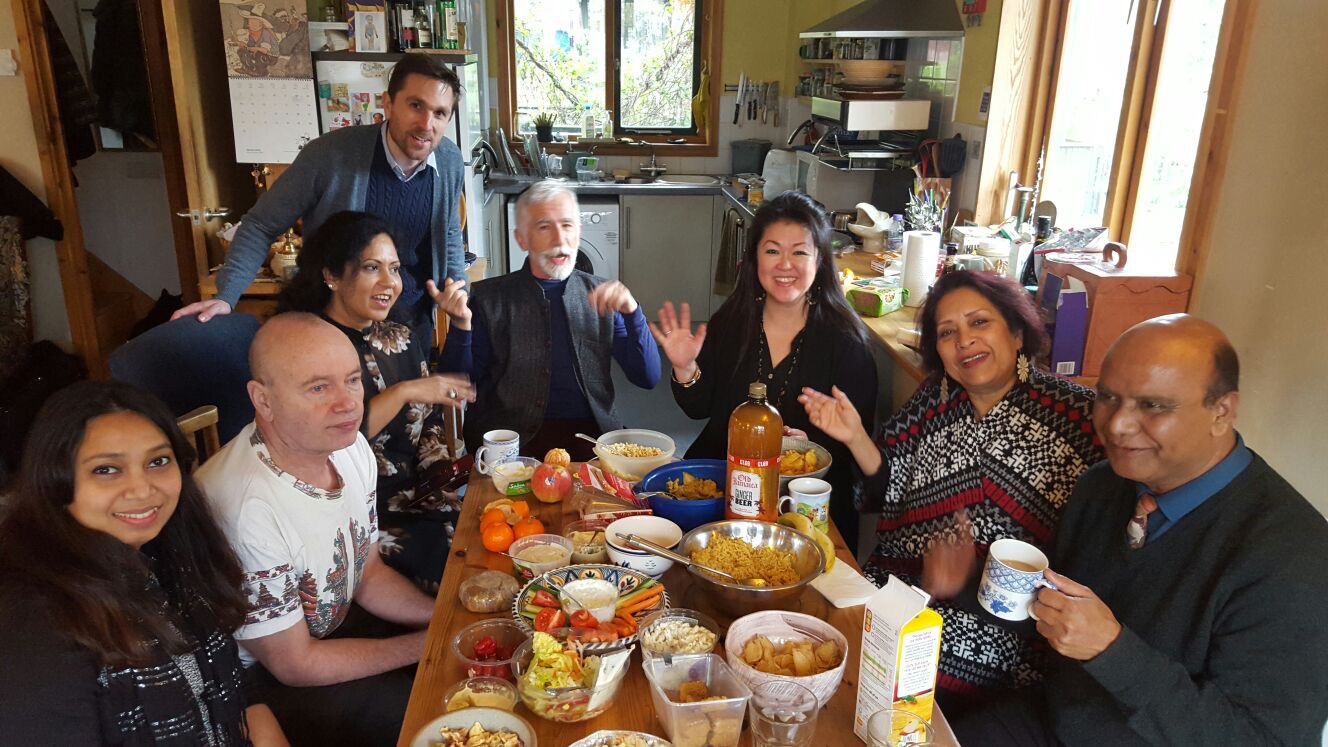
Some of the East Storytelling community 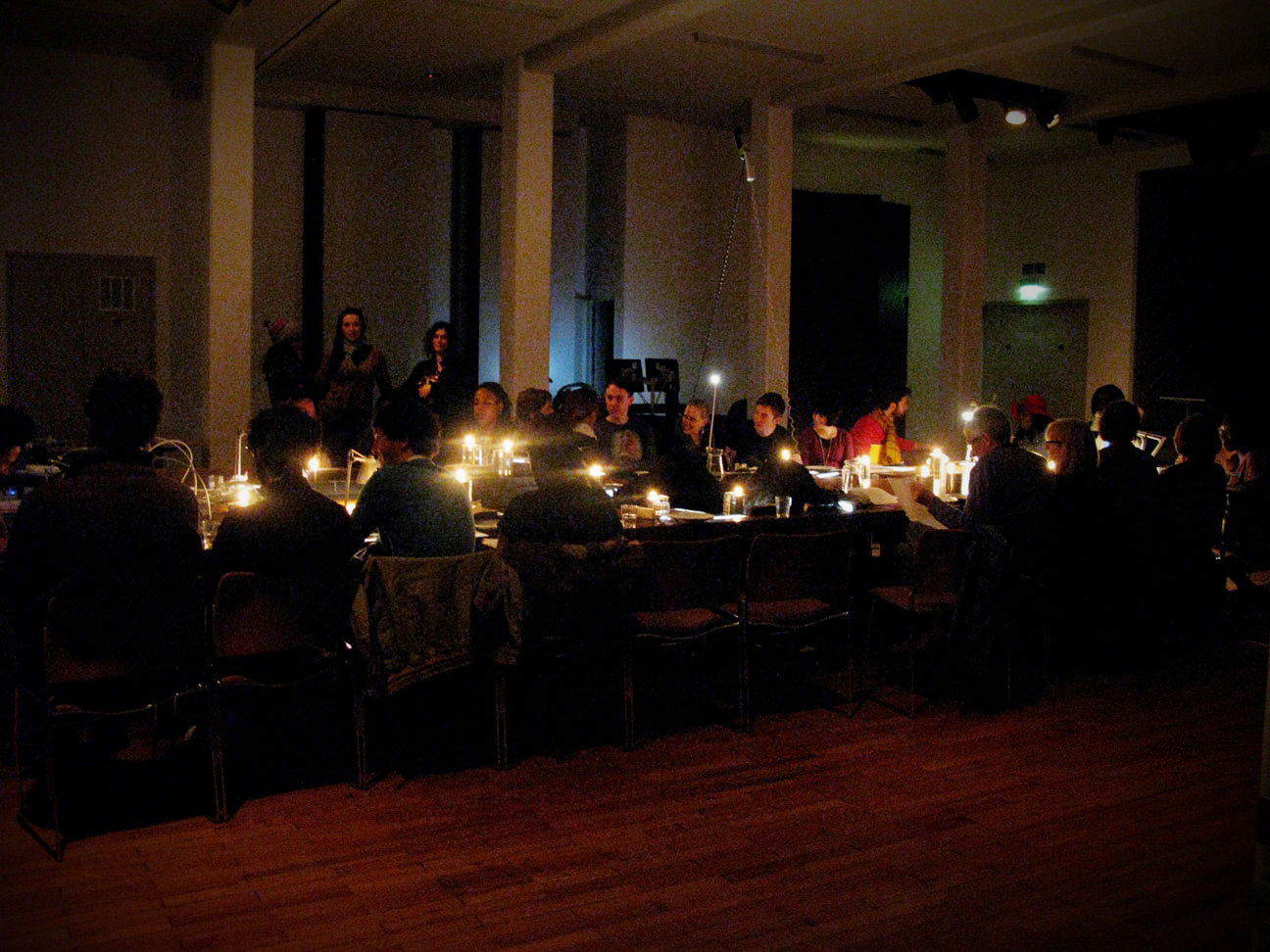
A Place at the Table at Amnesty International 
Some of the East Storytelling community 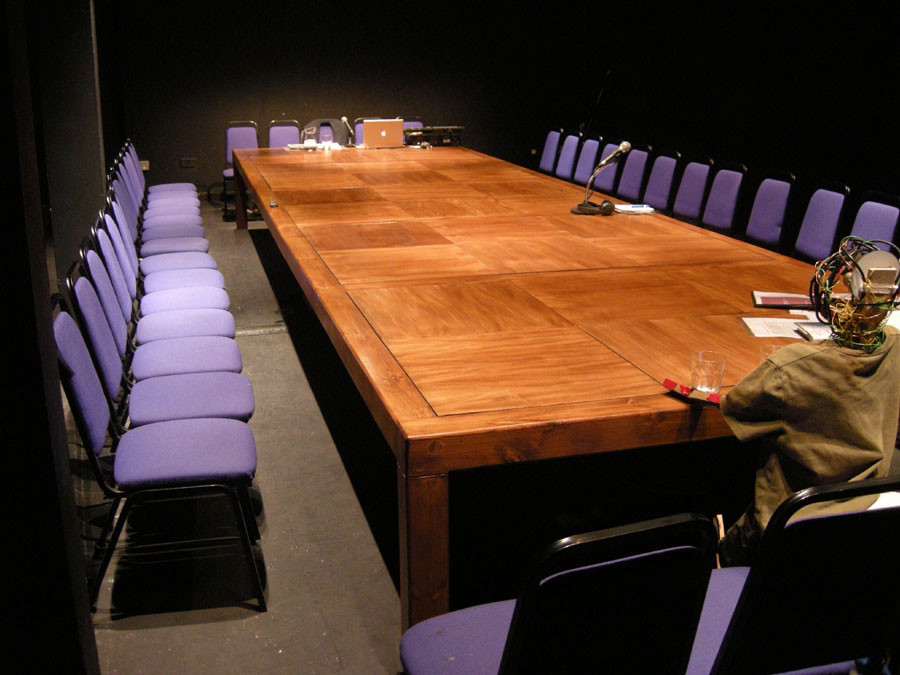
Selfish at CPT – the set
We’re developing a new audio project exploring the histories, memories and communities of Drummond Street and the surrounding area in Camden, with a particular focus on Bengali experiences and heritage.
We want to uncover the stories that bring local history to life: growing up in Camden, arriving in Britain, family histories, favourite restaurants, local shops, food, friendships, community organising and how the neighbourhood has changed across generations.
Did you grow up in Camden, work on Drummond Street or have connections to the Bengali community? We’d love to hear from you.
We’re particularly keen to speak with Bengali community members, women, older residents, former residents and local traders. Whether you have a story to share, photographs to contribute or suggestions for people we should speak to, we’d love to hear from you.
Please contact us at tasnimproduces@gmail.com to share your story or find out more about taking part.
Who we are
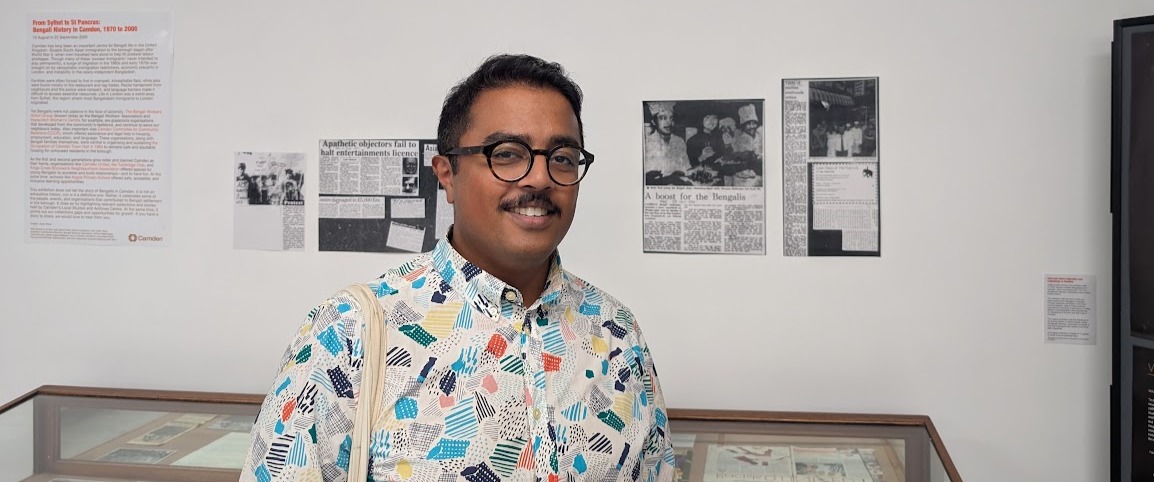
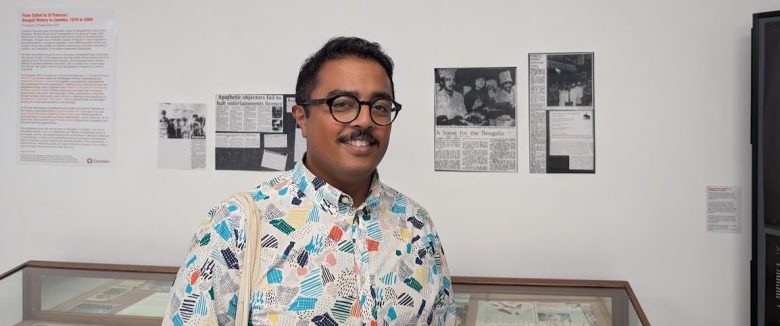
Creative Researcher: Tanbir Mirza-Baeg (he/him) is a graphic artist and archivist based in Basingstoke, with a background in Graphic Arts from Winchester School of Art. His work with the Bengali Britain project and Bengali Photo Archive has explored family histories, oral storytelling and community heritage. He also has a personal connection to Camden through his Nana-ji’s history in Warren Street.
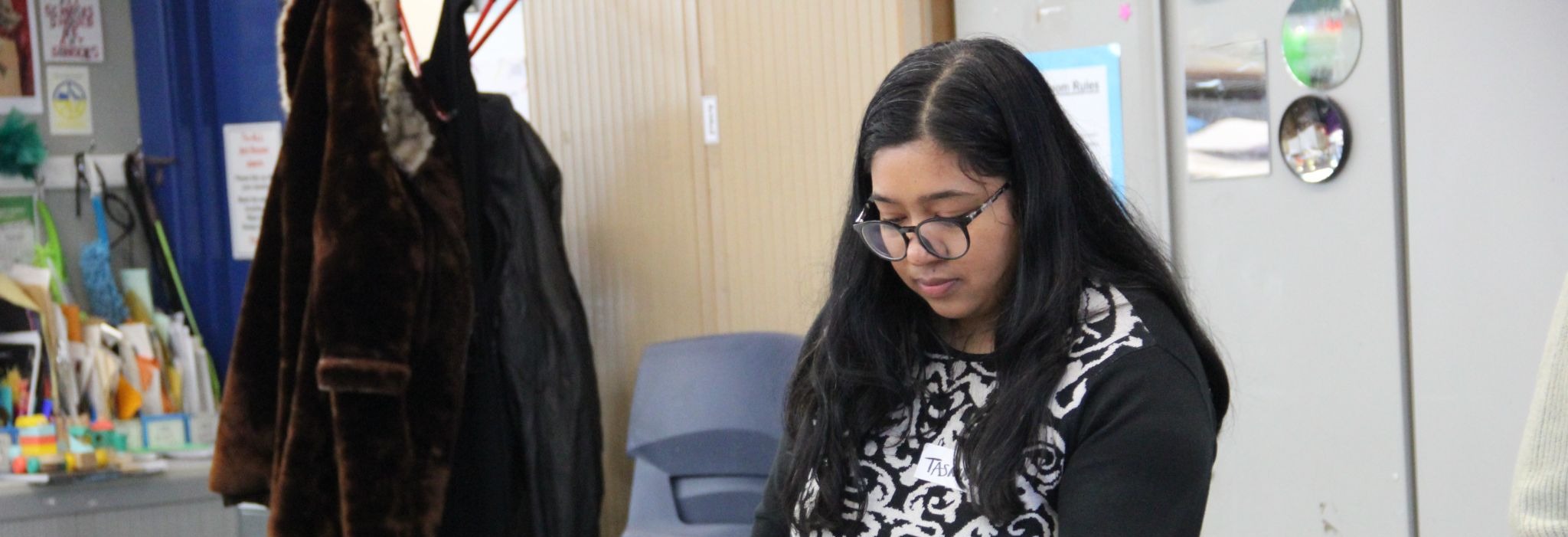
Creative Producer: Tasnim Siddiqa Amin (she/they) is a British-Bangladeshi theatre producer and researcher, and Project Manager and Assistant Artistic Director at Daedalus Theatre Company. Her work explores community arts, migration and underrepresented histories. Having grown up in Tower Hamlets, she has a particular interest in Bengali heritage, community organising and the stories that connect generations.
About the Project
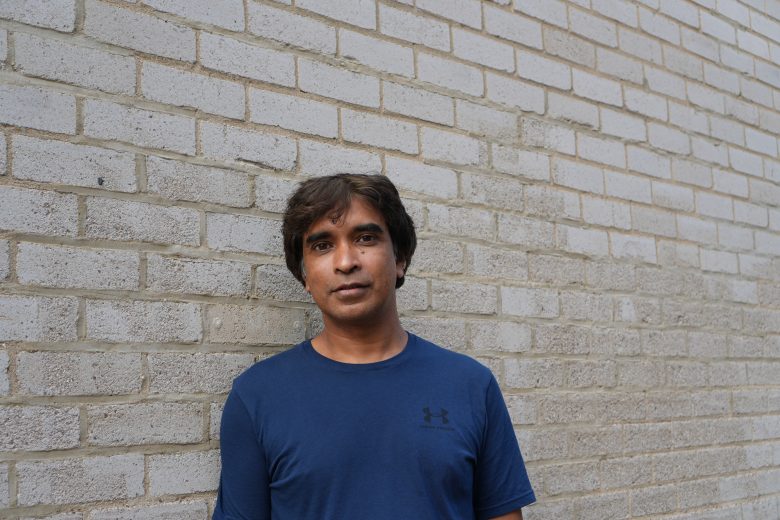
Photo of Mothiur Rahman by Tasnim Siddiqa Amin on Hanbury Street (2026)
Meet Mothiur Rahman, our newest East storyteller. Originally from Leeds, Mothiur came to London in the early noughties, where an unexpected act of kindness would begin to change the way he understood his own story. A lawyer and environmental law lecturer by day, his creative practice is rooted in finding space for stories that might otherwise go unheard.
In this Spotlight, Mothiur reflects on storytelling, migration, belonging and the role creativity can play in making sense of our lives.
What does storytelling mean to you?
Well, my own story is about an act of kindness where a friend who I accidentally bumped into after a 12-year break sat me down and asked me, ‘Well, what has been your story over the last 12 years?’
There was a kindness in how she presented the question that felt really inviting and heart-opening. I was going through a particularly tumultuous time and, as I began to try to piece together my life over such a long period to respond to her question, I suddenly began to see the tumultuousness in a different way, saw it connect to threads in that 12-year period I hadn’t seen before.

Ninety years after the Battle of Cable Street, our communities in the East End continue to stand up to hate with creativity and connection. Daedalus Theatre Company joins Together on Cable Street for a programme of workshops and events leading up to October 4th, culminating in a demo and march starting outside Tower Hamlets Town Hall in Whitechapel from 12PM.
Joining the Together programme makes a lot of sense for Daedalus. We are a local theatre company with experience working with working-class and migrant communities, and we are therefore aware of the very real threat facing our communities in today’s political climate. We have also invested in long-term relationships with artists who share our values of combatting injustice, hatred and bigotry. Daedalus reflect the diversity of this great borough and has developed projects and programmes that are already attuned to anti-fascist and anti-racist movement building. Finally, as a company, we prize work that brings Jewish and Muslim communities together. This is particularly evident in our East Storytelling Project with internationally renowned Associate Artists Sef Townsend and Shamim Azad.
“The work that we do at Daedalus emerges out of necessity and urgency at an extremely tense time for migrants, queers and working-class communities in the UK. We believe in our duty as artists to bring communities together through the art of storytelling and theatre.” – Tasnim Siddiqa Amin, Assistant Director / Producer
We are very pleased to announce our partnership with the Tower Hamlets Trades Council and the local young people charity Streets of Growth to mark this historic moment.

East Music Song and Tune Exchange
Bring your instruments and voices along with songs and tunes from across the world’s folk and grassroots traditions to play, sing and share
This is a free, friendly and inclusive session for musicians of all levels of experience, and from all musical heritages. Global Majority* and LGBTQ+ music makers are particularly welcome. The session, which is acoustic only, will be led by members of the Black Smock Band, a queer folk group. If you’d like to bring a song or a tune to share with the group, please do!
Date: Monday 12 October 2026
Time: 7-9pm
Duration: 2 hours including a break for refreshments.
Location: Poplar Union, 2 Cotall St, London E14 6TL
Ages: 18+
Produced by Daedalus Theatre Company in partnership with Poplar Union. Funded by Arts Council England.
*Global Majority refers to people who are Black, Asian, Brown, dual-heritage, indigenous to the global south, and/or have been racialised as ‘ethnic minorities’.
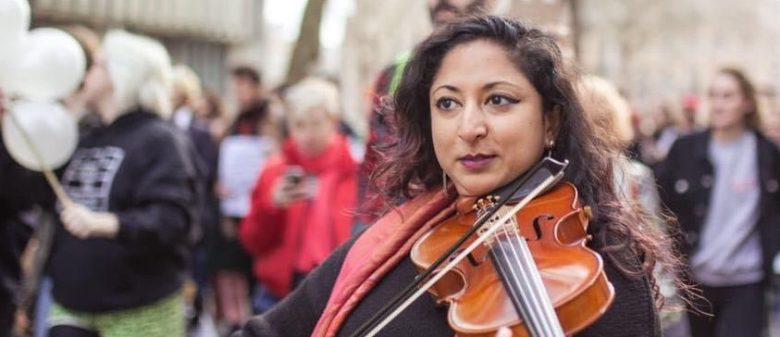
Queer musician, activist and academic Maya Bhardwaj joined the Black Smock Band for our Queer Revolutionary Singalong earlier this year. Growing up in the US, the songs she shared with the audience drew from her own experience and from her solidarity with Black American activism and revolutionary musical tradition. Read on to learn more about Maya’s incredible life, music and activism around the world before settling in East London, where you might find her teaching songs at protests.
Tell us about yourself and your creative practice.
I’ve been lucky to play the violin since I was 4 years old. This was thanks in large part to my mother, who put me into lessons where we were living at the time, the Appalachians in Virginia, also known as the home of bluegrass, a working-class music style forged through the meeting between Irish and English workers and Black African enslaved folks, where the fiddle plays a huge role. I trained in Western Classical but learned stylistic elements from bluegrass, and was also steeped in jazz and the Blues when we moved to Detroit, where I spent most of my youth. I also sang from a young age, casually and later slightly less casually, in choirs and musical theatre. I burned out on Western Classical education early, though, as I found the focus on endless hours of rehearsal, hyper-competition, and emphasis on perfecting exactly what was on the page to be overly dogmatic and stifling. My early music educators were amazing, though!
I gave up the violin for some years while in university, and came back to it really after meeting an amazing violinist in Cuba who was the frontwoman of an incredible Cuban jazz band, who encouraged me to re-learn in an improvisational style. I worked with an amazing improvisational coach and bluegrass and jazz violinist in New York while I lived there, who really re-built my comfort in feeling into the music and going with the flow in a collective way. I also worked briefly with two amazing Carnatic violinists in New York as well, and then studied closely with Celtic violinists and Cuban jazz musicians in the UK, Mariachi and Son Jarocho musicians in Mexico, South African jazz and maskandi musicians while I lived in Johannesburg, and some incredible Bangla musicians while I lived in Dhaka. Like my life, my creative practice has been all about picking up the influences of the diverse cultural spaces in which I’ve been privileged to live, figuring what works for me, and building a bit of an eclectic soup.
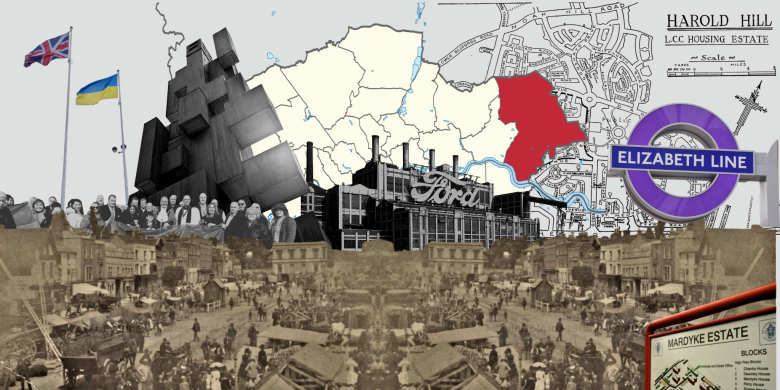
It’s been two and a half years since Daedalus first announced our partnership with Havering Changing and we feel really grateful to continue this collaboration with two new workshops this Summer.
Collaging Havering: Past, Present and Future
First up, we’re heading to Rainham on Saturday for the Annual Mardyke Community Centre Summer Festival. The event is free to enter with live entertainment, family activities and a wide range of refreshments on offer. Daedalus Assistant Producer Tasnim Siddiqa Amin and local artist Vicki Griffith will be facilitating a creative collage workshop exploring Havering’s past, present and future.
From the migration of East End communities after the Second World War to changing demographics, industries and high streets, we’ll share stories from local history, reflect on what community means in Havering today, and imagine what the borough could look like in years to come.
Date: Saturday 13 June 2026
Time: 12PM – 4PM
Location: Mardyke Community Centre, 52 South St, Rainham RM13 8PJ
No booking required, just turn up.
The creative nature workshops Daedalus delivered in Rainham in 2024 gave Vicki “the confidence to explore this side of my creativity more fully. Since then, I have continued learning through local craft workshops and more recently, simply to share with community partners and local groups. In 2025, three of my own denim artworks were selected for display as part of the ‘Secret Artist’s Project’ in Rainham, Essex.”
About the facilitators
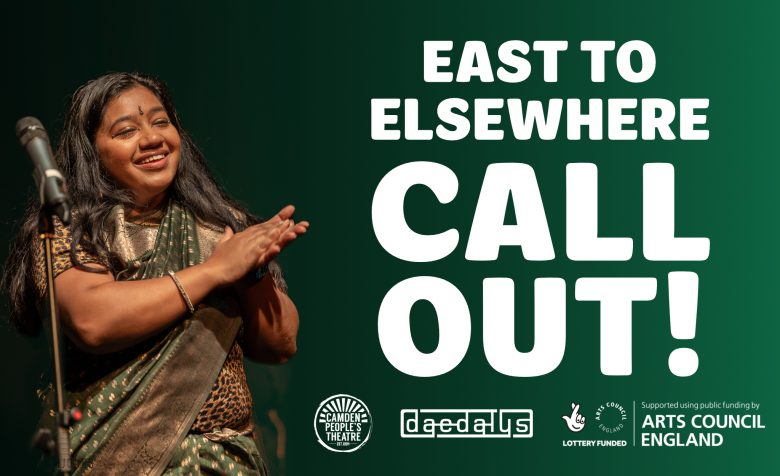
Do you have a story to tell about kindness? We’re looking for Bengali storytellers from Camden. If you have a story about acts of kindness, migration or how Camden has shaped your life, we want to hear from you! This callout is for people with little or no professional experience in storytelling.
About the Project:
We’re thrilled to bring East to Elsewhere to Camden People’s Theatre this Summer. This project will explore the rich history and diverse cultures of Camden and beyond through stories of migration, community and kindness.
The kind of thing that we are looking for:
- Stories about acts of kindness within migrant communities in Camden.
- Experiences of newcomers, especially refugees and asylum seekers.
- Historical migration stories linked to Camden.
- Contemporary stories about migration today.
- Personal stories – if you feel like sharing!
- Stories that reflect the awesome diversity of Camden.
Eligibility:
- Are you Bengali?
- Do you have a connection to the London Borough of Camden?
- Are you interested in telling stories?
- Are you new to storytelling?
If you answered yes to these questions and are NOT a professional storyteller, we invite you to pitch your story!
Key Details:
Our East Storytelling Project is back this summer, and we are thrilled to announce that we are growing our project thanks to a new partnership with Camden Peoples Theatre and funding from Arts Council England.
After marking ten years at Rich Mix in 2023 as part of A Season of Bangla Drama festival, we imagined what our storytelling project might look like outside of Tower Hamlets. Whilst the project began in the East End we have always had storytellers and audiences who have connected with us from across London and especially following the launch of our East Archive, this is a project that connects people across the globe. Stories of migration are at the heart of the project, so it makes sense that we, too, would migrate!
Last year we were successful for the Mayor’s Tower Hamlets Small Grants Programme, where we piloted East to Elsewhere by responding to the A Season of Bangla Drama 2025 festival theme of kindness.
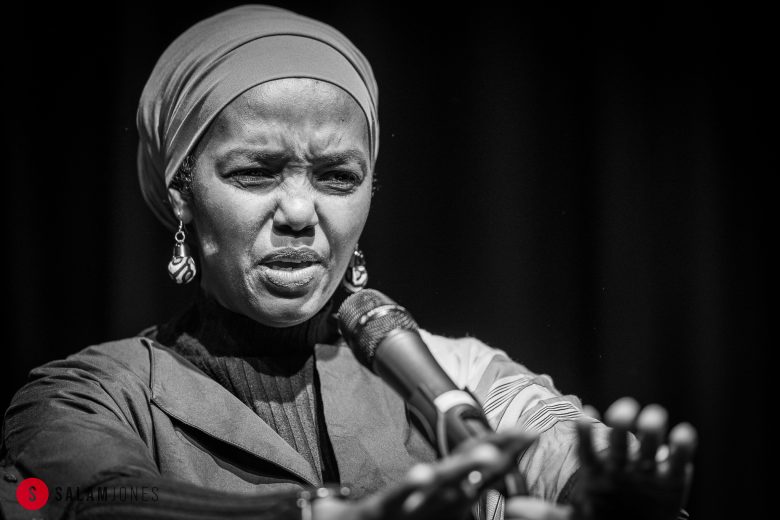
Photo of Kauthar at East to Elsewhere by Salam Jones (2025)
Our third East spotlight is on secondary school teacher, mum and storyteller Kauthar Abdi. Tasnim Siddiqa Amin had a chat with Kauthar about her rich Somali cultural heritage and what she’s learned from her engagement with the East Storytelling Project, from her first workshop with us in 2021 through to her first paid performance last November at A Season of Bangla Drama festival 2025.
Listen to the interview here.
Tell us about yourself
My name is Kauthar, a secondary school teacher. I’m a mum. I was about 20 years old when I experienced Islamophobia, and that made me go into a world I never imagined, which is becoming [a] really strict Muslim, wearing the veil and that took a while for me to come out of and, in a way, I needed to get out of the relationship I was in in order to get out of that. That’s been quite a journey, and coming out of that made me feel like I had stories to tell, and I’ve always felt like there’s stories I want to share. I grew up with oral storytelling, Somali folk tales, and that was my most wonderful memories as a child.
Have you got any specific memories of the kind of oral stories or the folk stories that you can share with us?
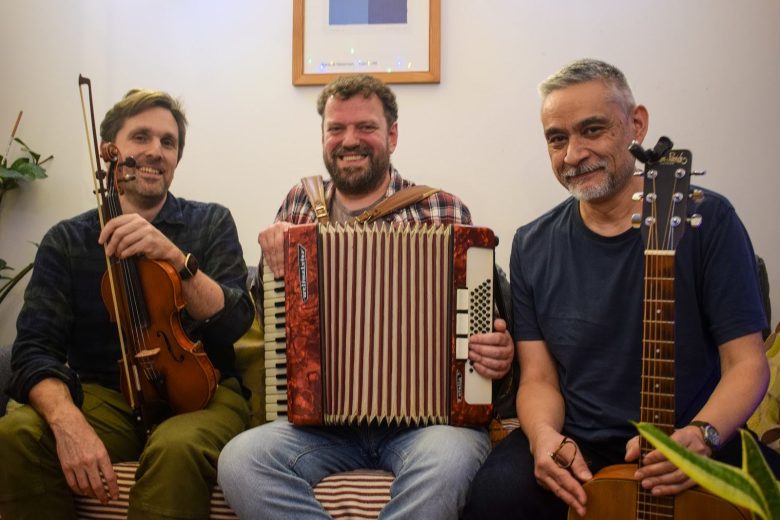
Photo of Paul Burgess, Dan Cox and Andy Bannister (left to right) by Tasnim Siddiqa Amin at a rehearsal in Deptford, 2026
Daedalus Theatre Company and the Black Smock Band have worked together on many projects. You may recognise our director, Paul Burgess, as one of the members of the band! After years of collaborations, we think it’s time to spotlight the band in their own right. Grab a cuppa and settle in because it’s a read as heart-warming as the band’s music, which incidentally, you can hear live – and sing along with – on Wednesday 22nd April 2026 at Camden People’s Theatre. Book your tickets for QUEER REVOLUTIONARY SINGALONG now:
Tell us about yourself and your creative practice.
Andy Bannister: In addition to being a musician, I’m a visual artist and a tutor working in higher education. I teach on a fine art course where I mainly work with students who focus on sculpture and combined media- this reflects what I do when I’m in my studio. In my current work, I’m exploring the impact of science and technology on culture and society, with a focus on the widespread civil opposition to the nuclear arms race during the Cold War period. There’s a crossover here with my activities as a musician, in terms of my interest in the role of folk music within protest movements and the emphasis on stories of resistance within the folk tradition.